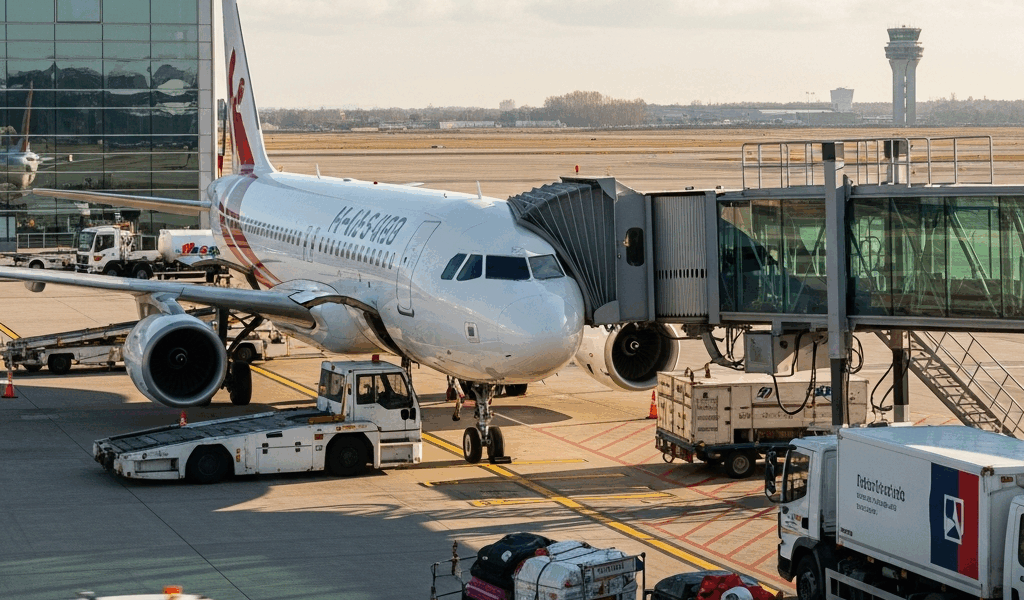
American Airlines announced today it will outfit its entire Airbus narrowbody fleet with SpaceX’s Starlink satellite Wi-Fi starting in early 2027. It’s a major move as free in-flight connectivity becomes the industry standard.
The carrier will install Starlink on more than 500 narrowbody aircraft—including new Airbus A321XLR extended-range narrowbody and A321neo deliveries—with installations beginning in Q1 2027. All AAdvantage members will get the service free, continuing American’s push to match competitors who already offer no-cost connectivity across their fleets.
American kept the financial terms under wraps. But the airline noted that the Starlink Aero Terminal can deliver up to 1 Gbps per antenna, handling everything from streaming and online gaming to real-time collaboration and browsing with gate-to-gate coverage on domestic and short-haul international routes.
Competitive Positioning in Industry Wi-Fi Arms Race
American joins United Airlines in the race. United has already finished installing Starlink on over 300 aircraft and expects to exceed 800 by year-end 2026. The carrier began passenger testing in 2025 and has logged more than seven million passengers across 129,000 flights using the service.
Alaska Airlines made a similar commitment in late 2025, vowing to equip its entire fleet with Starlink and provide free service to Atmos Rewards members starting in 2026. Internationally, the Lufthansa Group will equip approximately 850 aircraft with Starlink from 2026 onward, aiming for full fleet coverage by 2029. Air France is rolling out Starlink too—with free access for Flying Blue loyalty members.
American’s Starlink deal comes months after the carrier launched AT&T-sponsored free high-speed Wi-Fi to all AAdvantage members across more than two million flights annually, beginning in January 2026. The airline had announced that initiative back in April 2025, marking the first time American offered complimentary Wi-Fi fleet-wide.
“As American celebrates 100 years of delivering industry firsts—including the first loyalty program and first airport lounge—we’re setting the standard for connectivity in the skies,” said Heather Garboden, Chief Customer Officer. “Free high-speed Wi-Fi isn’t just a perk. It’s essential for today’s travelers.”
Technical and Operational Implications
Starlink operates a low-Earth-orbit constellation at approximately 550 kilometers altitude. That means less latency than traditional geostationary satellites, which sit 35,000 kilometers above Earth. American highlighted how the lower orbit enables seamless connectivity for business use cases.
Installing Starlink takes about eight hours per aircraft on average—though regulatory approvals remain the critical bottleneck. The FAA’s Supplemental Type Certification process for each aircraft model will ultimately control when deployments happen.
American’s Boeing widebody fleet will stick with existing providers: Viasat and Panasonic Avionics. The airline is evaluating long-haul connectivity strategies separately, a two-track approach that reflects different technical and commercial demands for long-range international operations.
Strategic Context
The announcement fits into American’s broader product modernization push. The airline is rolling out new Flagship Suite aircraft with closing-door front-cabin suites and taking delivery of A321XLR extended-range narrowbodies. CEO Robert Isom said in February 2026 that connectivity improvements would work alongside new lounges and better food and beverage offerings as part of the carrier’s turnaround.
American’s 2025 financial results underperformed Delta and United. The flight attendants’ union issued a no-confidence vote in Isom—the first in union history. The Starlink commitment, paired with the AT&T free Wi-Fi program, signals a visible investment in customer-facing product as the carrier works to improve its competitive standing.
SpaceX announced the deal weeks before its expected public offering, adding another aviation win to Starlink’s expanding commercial satellite network.


Stay in the loop
Get the latest aviation news updates delivered to your inbox.