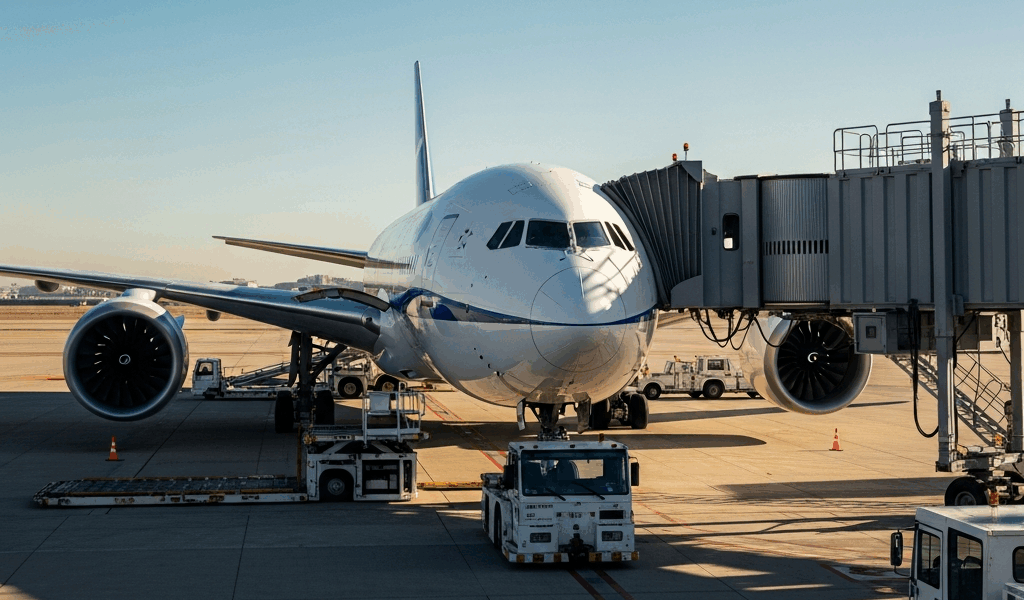
Emirates is rejecting delivery of 10 to 11 Boeing 777-9s from its production queue. The airline cited extensive rework requirements needed to bring the aircraft up to current certification standards—a significant quality control setback for Boeing’s most critical widebody program and a stark reminder of the manufacturer’s persisting production challenges.
The announcement came during a media roundtable at the 2026 Farnborough International Airshow on July 21. Emirates President Tim Clark told Aviation Week and other outlets that the airline would not accept the initial batch of 777-9s despite having placed the order more than a decade ago.
“We are not taking them,” Clark said flatly. “Being around eight years old already, they are going to need a complete upgrade on the mod status because, since they were produced, there’s quite a lot that has happened to the airframe and all the other bits and pieces.”
The Rework Problem
Aircraft built years before final type certification enters force become outdated relative to the approved design. That’s the persistent challenge facing extended certification programs. Boeing calls this “change incorporation”—the costly retrofit process required to bring pre-built airframes into compliance with the final certified standard.
Boeing Commercial Airplanes President Stephanie Pope acknowledged the scale of the problem. The manufacturer has launched a dedicated “change-incorporation” program affecting approximately 30 to 40 early-built 777X aircraft. “There is a different amount of change on each airplane,” Pope said. “The very early build airplanes are going to have more change.” She added that Boeing has already accounted for the impact in its financials.
The first 777-9 airframe intended for Emirates—line number 1611, known as WH007 and registered A6-EZT—rolled out of Everett in July 2019 partially adorned with Emirates livery. In late 2025, Boeing determined the economics of reworking it no longer justified completion and disassembled the aircraft. Boeing confirmed this decision on July 20 in response to queries from The Air Current. It represents a write-off of one airframe from the over $15 billion in charges Boeing has already booked against the delayed 777X program.
Impact on Delivery Timeline and Market
Emirates is Boeing’s largest widebody customer with 270 firm 777X orders on its books—nearly half of all passenger 777X commitments. The airline now expects its first deliveries in Q2 2027 at the earliest. Clark acknowledged the target is “a bit of a stretch,” particularly with Boeing simultaneously managing certification campaigns for the 737 MAX 7 and MAX 10.
The 777X has been delayed since its 2013 launch, missing the original April 2020 delivery date to Emirates by a significant margin. The FAA has signaled it expects to issue type certification late this year or early 2027. Launch operator Lufthansa is also awaiting first delivery in 2027.
Clark reiterated Emirates’ frustration with the drawn-out program. The airline should have received aircraft “in April 2020″—a seven-year slip. He also referenced a static-test failure during development as evidence of the extensive modifications required on early-build jets.
Broader Quality Questions
The rejection raises fresh questions about Boeing’s production standards across its widebody portfolio. This echoes the manufacturer’s experience with early-build 787 Dreamliners, nicknamed the “Terrible Teens,” which required substantial rework and in some cases never entered service.
At least one test aircraft will arrive in Dubai in September for validation testing, Clark indicated. After that, GE Aerospace GE9X engines will undergo deep maintenance following operation in harsh conditions.
Investors will be watching closely when Boeing reports earnings on July 28. The 777X rework burden remains a critical focal point for program economics and Boeing’s ability to recover from years of delays and cost overruns.

Stay in the loop
Get the latest aviation news updates delivered to your inbox.