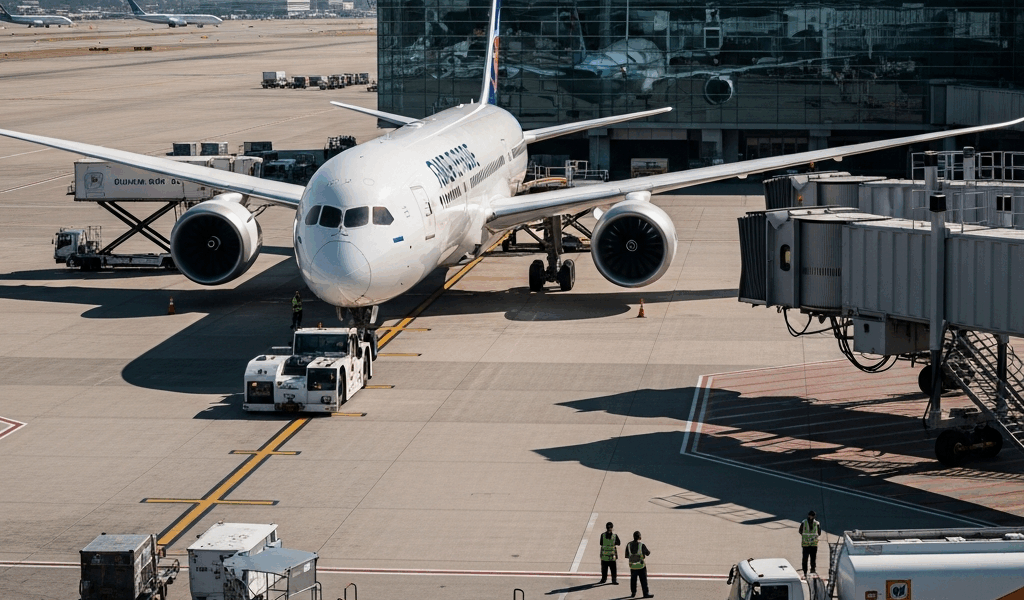
Southwest Airlines is pulling out of Chicago O’Hare International Airport (ORD) and Washington Dulles International Airport (IAD) starting June 4, 2026. The move signals a major strategic shift as the carrier refocuses on lower-cost operations at its core bases, away from two of America’s most congested, slot-constrained airports.
The airline made the announcement on March 13, 2026. Final flights at both airports will operate on June 3. Southwest will give up three gates at O’Hare and eliminate more than 300 daily flights from the airport. From Dulles, it’s discontinuing the two routes it operated—Denver and Phoenix.
O’Hare Exit — Five-Year Presence Ends
Southwest launched at O’Hare on February 14, 2021, as part of a pandemic-era expansion into 18 cities. But the operation never took off. The carrier captured just 1.7% of the airport’s two-way weekly seat capacity and was operating 15 nonstop destinations when it decided to leave—one of its weakest performing large-market launches.
“Operating at Chicago O’Hare continues to be challenging,” Southwest said in a statement. “We are confident we can serve Chicagoland from our long-standing base at Midway, where we will continue to offer service to more than 80 destinations.”
Southwest has been at Chicago Midway (MDW) for 41 years since 1985. By 2026, the carrier will operate more than 90% of Midway’s total departures—up to 244 daily flights. The airline made clear that every destination currently reachable from O’Hare will remain available from Midway.
This exit fits Southwest’s pattern. The carrier exited Houston Intercontinental (IAH) in 2024 after trying similar growth there in 1992 and pulling out after just one year. CEO Bob Jordan put it bluntly in April 2024: O’Hare routes “don’t have a path to the level of financial performance that we need.”
Dulles Withdrawal — 19-Year Presence Ends
Southwest’s Dulles operation has been stuck in neutral since October 2006. The 2012 AirTran merger—and the access to Reagan National Airport (DCA) that came with it—undermined the Dulles base. When American acquired US Airways in 2014-2015, it further eroded Southwest’s position, as American expanded its own DCA slot allocation.
By 2026, Southwest had already cut Dulles back to just three daily flights on Denver and Phoenix. The airline will keep running a combined 271 departures to 79 nonstop destinations from DCA and Baltimore/Washington International Thurgood Marshall Airport (BWI), where it’s the second-largest carrier by seats.
The Metropolitan Washington Airports Authority stated it was “disappointed” by the exit and “hope Southwest will return to Dulles in the future.”
Capacity Redeployed to Growth Markets
The aircraft freed up from O’Hare and Dulles are funding a 31-route expansion. Southwest is launching daily nonstop service to Anchorage’s Ted Stevens International Airport on May 15, 2026—operating flights from Denver and Las Vegas. The carrier is also adding nonstop flights from Orlando to St. Maarten and from Las Vegas to San Jose, Costa Rica.
These exits fit into a larger transformation taking place in 2025-2026. Southwest launched assigned seating on January 27, 2026, and is introducing bag fees and basic economy fares—ending the carrier’s historic “bags fly free” and open seating model. Management is projecting incremental revenue exceeding $1 billion by 2026 and adjusted EPS of at least $4.00, a 300%+ jump from 2025’s net income of $441 million.
Regulatory and Competitive Implications
Southwest’s three O’Hare gates will almost certainly go to American or United under use-it-or-lose-it allocation policy. The FAA capped ORD operations at 2,708 daily flights from May 17–October 24, 2026, in response to chronic congestion. Both American and United are aggressively adding frequencies to hold onto their gate positions. United is already expanding at Dulles, where it has a dominant footprint.
Employees affected by the exits can bid for open positions elsewhere in the network. Affected customers can request full refunds, including refunds for non-refundable tickets and optional fees.

Stay in the loop
Get the latest aviation news updates delivered to your inbox.