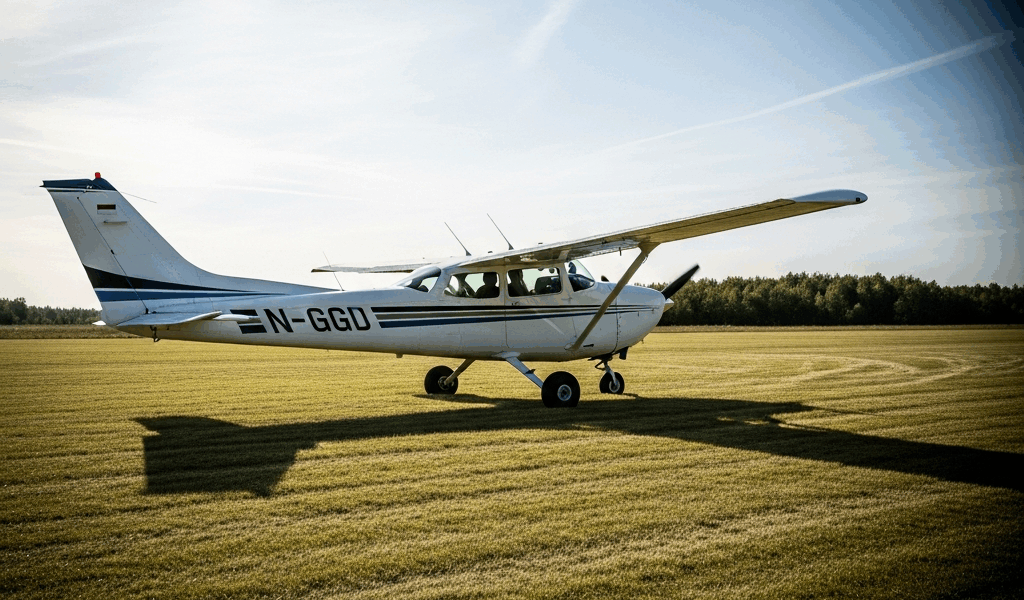
Your flight instructor just told you that you need a “high performance endorsement” before you can fly a certain aircraft. But what actually makes an aircraft “high performance” in the FAA’s definition? It is not about speed, not about cost, and not about how intimidating the aircraft looks on the ramp.
The FAA Definition: What Makes an Aircraft High Performance
Under 14 CFR Part 61.31(f), a high-performance aircraft is one that has an engine with more than 200 horsepower. That is the complete definition. One criterion. More than 200 HP.
Prior to 1997, the FAA definition also included retractable landing gear, a controllable pitch propeller, and a flap system. Those additional criteria were separated into the “complex aircraft” endorsement category. Today, high performance is solely about engine power output.
What This Means in Practice
Common high-performance aircraft include the Cessna 182 (230 HP Lycoming O-470), Cirrus SR22 (310 HP Continental IO-550), Beechcraft Bonanza A36 (300 HP Continental IO-550), and Piper Cherokee Six (300 HP Lycoming IO-540). These are not exotic aircraft — they are common general aviation airplanes that happen to exceed the 200 HP threshold.
Common training aircraft like the Cessna 172 (180 HP) and Piper Warrior (180 HP) fall below the threshold. The Cessna 182 is often the first high-performance aircraft a pilot transitions to — it looks and feels similar to a 172 but the extra 50 HP requires different speed management, approach planning, and power setting awareness.
Getting the Endorsement
The high-performance endorsement requires ground and flight training from an authorized instructor in a high-performance aircraft (or an FAA-approved simulator). There is no written test and no practical test — the instructor provides the endorsement in your logbook when they determine you are proficient in the operation of high-performance aircraft.
Most instructors cover engine management (proper power settings, mixture leaning at altitude, cylinder head temperature monitoring), performance planning (takeoff and landing distances at higher weights and speeds), and speed management (faster approach speeds, energy management on descent). The training typically takes 3-5 flight hours for a pilot already proficient in similar aircraft.
High Performance vs Complex: Two Different Endorsements
These are separate endorsements. A high-performance aircraft has >200 HP. A complex aircraft has retractable gear, a controllable propeller, and flaps. An aircraft can be one, both, or neither. A Cessna 182 (fixed gear, fixed prop, 230 HP) is high performance but not complex. A Piper Arrow (retractable gear, controllable prop, 200 HP) is complex but not high performance. A Beechcraft Bonanza (retractable, controllable prop, 300 HP) is both.
If you plan to fly aircraft that are both high performance and complex, you need both endorsements — they do not overlap.


Stay in the loop
Get the latest aviation news updates delivered to your inbox.