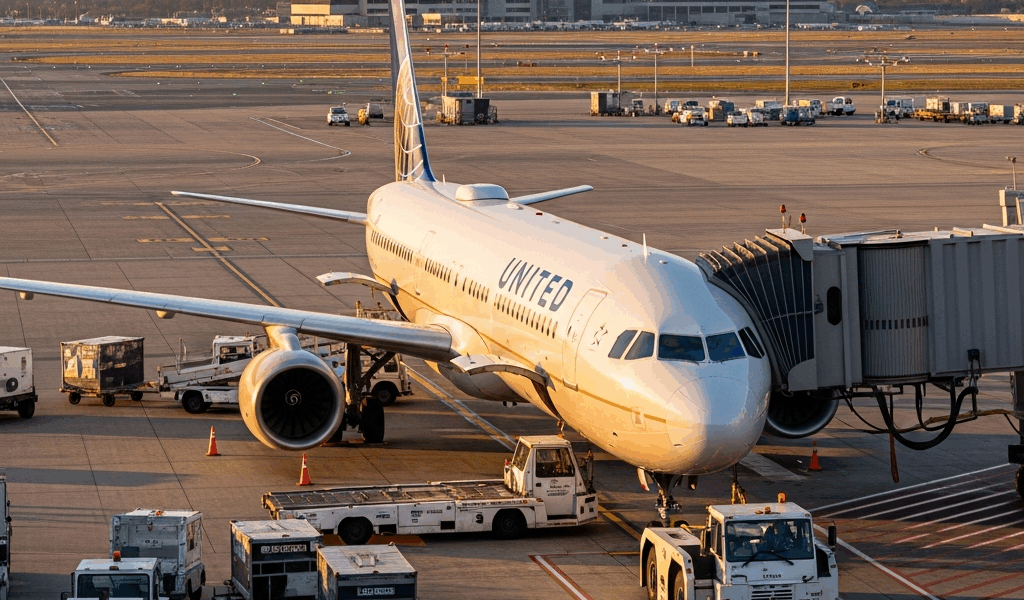
United Airlines is reconnecting service to Tuxtla Gutiérrez in southern Mexico, expanding its Mexican network to 25 destinations—more than any other U.S. carrier currently serves in the country. It’s the carrier’s return to the Chiapas state capital after a 13-year absence, driven by aggressive capacity redeployment into high-yield leisure markets following Spirit Airlines’ complete operational cessation.
Starting October 28, 2026, United will operate three weekly flights from Houston George Bush Intercontinental Airport (IAH) to Tuxtla Gutiérrez Ángel Albino Corzo International Airport (TGZ). SkyWest Airlines will handle operations using Embraer E175 regional jets configured with 70–76 seats across United First, Economy Plus, and Economy cabins. The 907-mile southbound flight is blocked at 2 hours 44 minutes. Economy Standard fares run around $938 for roundtrip service, with seats already available for purchase on United’s website.
Mexico as Strategic Priority
Mexico is United’s largest international network by destination count—bigger than Canada, Spain, or Portugal combined. Tuxtla Gutiérrez brings the airline’s Mexican footprint to 25 cities served from eight U.S. gateways: Acapulco, Aguascalientes, Cancún, Cozumel, Guadalajara, Ixtapa-Zihuatanejo, León, Manzanillo, Mazatlán, Mérida, Mexico City, Monterrey, Morelia, Oaxaca, Puebla, Puerto Escondido, Puerto Vallarta, Querétaro, San José del Cabo, San Luis Potosí, Tampico, Tepic, Tulum, Tuxtla Gutiérrez, and Veracruz.
Houston dominates United’s Mexico operations. Roughly 57 percent of all flights to Mexico depart from IAH between June and December 2026, according to Cirium aviation data. Mexico City remains the airline’s second-busiest international destination, with over 4,700 scheduled flights in 2025 across Denver, Newark, Washington Dulles, Houston, Chicago O’Hare, and San Francisco.
Capacity Vacuum and Competitive Positioning
Spirit Airlines ceased all operations on May 2, 2026. The shutdown removed approximately 21.3 million annual seats from the U.S. market—a blow triggered by chronic financial instability, surging jet fuel costs, and failed federal rescue negotiations. That created a significant capacity gap on Mexico leisure routes that competitors are now racing to fill.
Breeze Airways has emerged as the primary beneficiary, rapidly expanding service to Mexico resort cities and Florida beach towns. JetBlue and Avelo Airlines have also added capacity on vacated Spirit routes, though combined seat additions from all entrants do not fully replace Spirit’s removed volume on key leisure corridors, according to IATA capacity tracking.
United’s Tuxtla Gutiérrez service positions the carrier to capture demand that would have otherwise flowed to ultra-low-cost competitors. The route marks the first international service at an airport otherwise dominated by domestic operations and Viva Aerobus low-cost flights.
Broader Mexico Expansion Underway
Tuxtla Gutiérrez is just part of a larger United Mexico acceleration. The airline is also launching service from Houston to Tepic International Airport (TPQ) in Nayarit starting in December 2026, and returning to Washington Dulles–Los Cabos (SJD) starting October 25, 2026 with up to four weekly frequencies. The Cabo return ensures the destination is now served from all seven of United’s domestic hubs and represents the carrier’s first service since 2019.
These moves align with United Next, the carrier’s fleet modernization strategy adding 250+ aircraft by 2028, including Airbus A321neo “Coastliner” jets and Boeing 787-9 Dreamliners optimized for Mexico and Spain connectivity. United operates the world’s largest mainline fleet with more than 1,000 aircraft and over 200 Embraer 175s across its United Express regional subsidiaries—operated by SkyWest, Mesa Airlines, and Republic Airways.
Mexico and the United States also recently reached a preliminary aviation agreement resolving capacity restrictions imposed since October 2025. Mexico is increasing Mexico City International Airport (AICM) movements from 44 to 46 per hour ahead of the 2026 FIFA World Cup, creating additional runway capacity for expansion.



Stay in the loop
Get the latest aviation news updates delivered to your inbox.