.. it’s one of those companies doing a dozen groundbreaking things at once. Today, I will share it all with you.
How Aurora Got Its Start
John S. Langford founded Aurora Flight Sciences back in 1989, and here’s the part I find fascinating — the whole thing grew out of research projects at MIT. In the early days, the company zeroed in on unmanned aerial vehicles and rapid prototyping. Pretty niche stuff at the time, honestly. But they didn’t stay small for long. Over the next few decades, Aurora branched into all sorts of aerospace domains, building a reputation that caught Boeing’s eye. In 2017, Boeing went ahead and acquired them, which gave Aurora access to way bigger resources. Now they’re a central piece of Boeing’s high-tech aerospace pipeline, and it’s wild to see how far they’ve come from those MIT labs.
Their Work with Unmanned Aerial Vehicles
If there’s one thing Aurora is known for, it’s UAVs. They’ve built drones for military and commercial applications alike, and some of these machines are genuinely impressive. Take the Orion, for instance — this thing holds an endurance record and can stay airborne for five straight days without landing. Five days! On the military side, their UAVs handle reconnaissance and tactical support missions. But it’s the commercial applications that I think will matter most long-term. We’re talking deliveries, aerial surveillance, and data collection for businesses that need eyes in the sky.
Hybrid-Electric Propulsion Is Where Things Get Interesting
Aurora’s work on hybrid-electric propulsion systems is some of the most forward-looking stuff happening in aerospace right now. The basic idea? You combine a traditional fuel engine with electric motors. It’s not as simple as it sounds, but when it works, you get lower fuel consumption and fewer greenhouse gas emissions. I’ve seen a lot of companies talk about “sustainable aviation” without having much to show for it. Aurora’s actually building the hardware. Their goal is a future where flying doesn’t come with such a massive carbon footprint, and they’re making real progress toward that.
Autonomous Flight — Not Just Autopilot
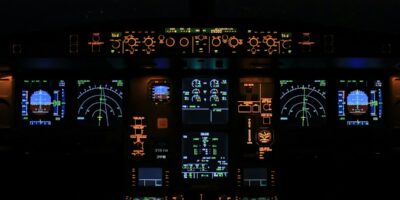
When I say “automatic flight systems,” I don’t just mean the autopilot you’d find on a commercial jet. Aurora’s developing tech that lets aircraft handle seriously complex tasks with minimal human input. Their systems work on both UAVs and traditional manned aircraft. Flight schools and educational institutions are using Aurora’s technology in simulators to train the next generation of pilots, which I think is a smart play. The safety angle matters too — when you reduce human error in the cockpit, everything from cargo flights to passenger travel gets more reliable. It’s one of those areas where the technology is moving faster than most people realize.
Rethinking Aircraft Design from the Ground Up
Aurora doesn’t just improve existing aircraft — they’re designing entirely new ones. They work with advanced composite materials that make airframes lighter, more durable, and more efficient all at the same time. But what really caught my attention is their work on Vertical Take-Off and Landing aircraft, or VTOL for short. These are planes and vehicles that don’t need a runway. Think about that for a second. In cramped urban areas or disaster zones where there’s no airstrip, VTOL aircraft can still operate. And the urban air mobility crowd? They see VTOL as the key to making air taxis a real thing. I’m not saying we’ll all be hopping air taxis next year, but Aurora’s putting the engineering pieces in place.
The Partnerships That Push Them Forward
Being owned by Boeing is a big deal, obviously, but Aurora’s partnerships go well beyond that. They’ve worked with NASA on some genuinely exciting projects. The one I keep coming back to is the X-57 Maxwell — an all-electric experimental aircraft that’s part of NASA’s push to prove green aviation technology can work at scale. It’s the kind of collaboration that moves the whole industry forward, not just one company. Aurora also partners with universities and academic institutions, which keeps their research pipeline fresh. There’s a reason they stay ahead of the curve, and a lot of it comes down to who they choose to work with.
Urban Air Mobility — The Bigger Picture
Urban Air Mobility, or UAM, is one of those concepts that sounds like science fiction until you look at what companies like Aurora are actually building. They’re developing prototypes for personal air vehicles and working on the traffic management systems needed to keep those vehicles from crashing into each other over a city. That second part is honestly the harder problem. You can build a flying car, but managing hundreds of them in urban airspace? That takes a completely different kind of engineering. Safety, sustainability, and efficiency are the three pillars Aurora keeps coming back to in their UAM work, and I respect that they’re tackling the infrastructure problem alongside the vehicle itself.
R&D Is in Their DNA
Aurora pours money into research and development, and they don’t treat it like an afterthought. Their R&D covers aerodynamics, propulsion, automation, and avionics — basically every major discipline in aerospace engineering. What sets them apart, at least from what I’ve seen, is how fast they move from concept to prototype. Rapid prototyping has been part of their culture since the MIT days, and it shows. That willingness to build, test, fail, and rebuild is what keeps them at the cutting edge. A lot of aerospace companies get bogged down in committee approvals. Aurora just builds the thing.
What Aurora Means for Boeing’s Future
Since the acquisition, Aurora’s become Boeing’s go-to team for autonomy and advanced systems integration. They’re not just a subsidiary filing reports — they’re actively shaping what Boeing’s next generation of aircraft will look like. The expertise Aurora brings to the table in autonomous flight, advanced propulsion, and innovative design is exactly what Boeing needs as the industry shifts toward cleaner, smarter flying machines. Together, the two companies are working toward a future where aviation is both more sustainable and more capable than anything we’ve got now. And honestly? Having watched Aurora grow from a scrappy MIT project into a major player, I’m betting on them to deliver.
As an Amazon Associate, we earn from qualifying purchases.
Marcus Reynolds
Author & Expert
Former U.S. Air Force pilot with 20 years of commercial aviation experience. Marcus flew Boeing 737s and 787s for major carriers before transitioning to aviation journalism. He specializes in pilot training, aircraft reviews, and flight safety analysis.





Stay in the loop
Get the latest aviation news updates delivered to your inbox.