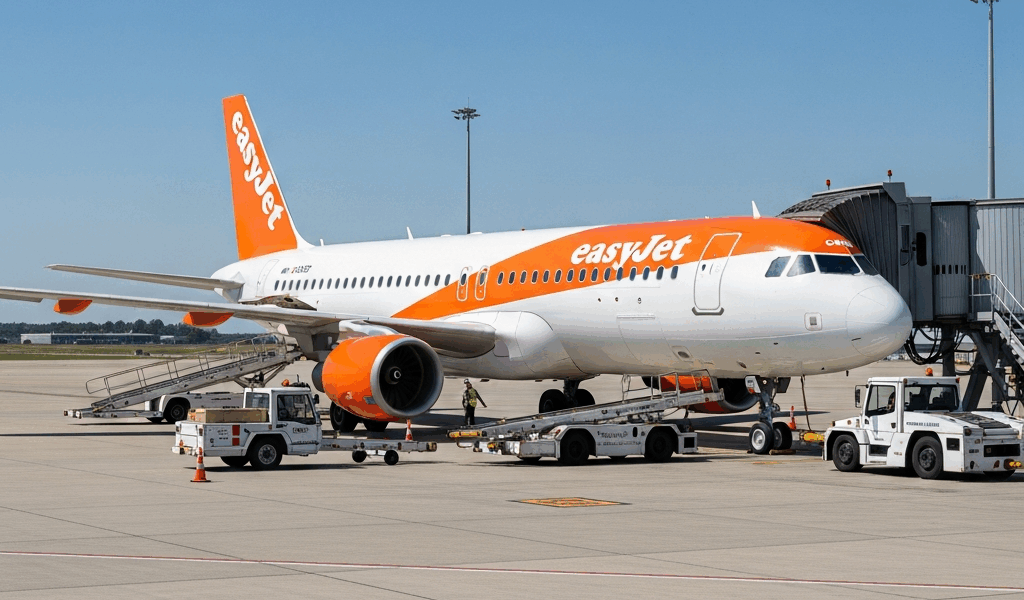
Apollo Global Management has upended easyJet’s takeover process. The investment firm launched a superior cash offer of £7.15 per share—approximately $9.61—valuing Europe’s second-largest low-cost carrier at £5.7 billion ($7.6 billion). The announcement on 10 July supersedes the previously agreed Castlelake proposal of £6.90 per share, worth £5.2 billion ($7.3 billion).
The easyJet Board has agreed in principle to Apollo’s terms and is no longer minded to recommend the Castlelake proposal. Under British takeover rules, Castlelake must decide by 3 August whether to bid or withdraw, while Apollo faces a firm offer deadline of 5:00 pm on 7 August 2026. No closing date has been confirmed. The transaction remains conditional on regulatory approvals and takeover panel consent.
Superior Terms Announced After Multi-Bid Process
EasyJet rejected five successive Castlelake bids in May and June 2026 before accepting the £6.90-per-share proposal on 5 July. Apollo submitted its improved offer on 8 July, with the Board announcing agreement in principle on 10 July. At £7.15 per share, it represents an 81% premium to the £3.94 closing price on 28 May—the last trading day before Castlelake’s interest became public.
The Apollo offer includes a Stub Equity Alternative, allowing shareholders to roll their existing easyJet shareholdings into the acquisition vehicle rather than take cash. Apollo Management X, L.P. will execute the bid on behalf of its managed investment funds. Apollo’s Private Equity division manages $67 billion in assets under management as of 31 March 2026.
The easyJet Board has agreed in principle to Apollo Global Management’s cash offer of £7.15 a share, which it judged a “superior outcome” for shareholders than Castlelake’s £6.90-per-share proposal.
Fleet Modernization and Strategic Assets Drive Valuation
EasyJet’s appeal as a takeover target rests partly on its fleet expansion and modernization strategy. The airline has committed to 290 firm orders for Airbus A320neo family aircraft—125 A320neo and 165 A321neo—with deliveries running through 2034, plus 100 additional purchase options. As of the first half of 2026, easyJet operated 356 aircraft and has taken delivery of four new A320neo family aircraft since H1 2025.
The airline expects its core fleet to grow to 395 aircraft by FY2028. In March 2026, easyJet announced a cabin configuration deal with Norfolk-based Mirus Aircraft Seating to install next-generation “Kestrel” economy seats on new A320neo and A321neo deliveries from 2028 onward. These seats are more than 20% lighter than current models, reducing aircraft weight by up to 500 kg on larger airframes.
EasyJet’s owned aircraft portfolio has strengthened considerably. The carrier now owns 86% of its A320neo fleet—above its 75% target—with net book value of owned assets reaching £5 billion. The company projects owned asset net book value will exceed £7.5 billion by full-year 2028.
Brand Retention and Regulatory Path Forward
Apollo has committed to retaining the easyJet brand by extending the existing licence agreement with easyGroup, the vehicle of founder Sir Stelios Haji-Ioannou. He owns roughly 15% of the airline and collects royalties on its revenue. This pledge may prove critical to winning over easyJet’s most influential shareholder.
Apollo stated it will take “all necessary steps” to secure merger clearance and approvals under the EU’s Foreign Subsidies Regulation. The transaction faces a key regulatory hurdle: EU airline ownership rules require carriers operating within the bloc to remain majority-owned and effectively controlled by EU nationals. Castlelake had previously outlined a structure with itself owning 49% of the acquisition vehicle and European aviation executives holding the remainder.
Apollo supports easyJet’s existing strategy—continuing fleet modernization, enhancing ancillary revenue and loyalty offerings, scaling easyJet Holidays into a differentiated earnings stream, and retaining key staff. The airline’s Holidays business generated £1,440 million in revenue (up 27% year-over-year) in H1 2026, with a medium-term profit target of £450 million by 2030.
On 10 July, easyJet shares climbed around 15% to roughly £6.75 on Friday morning, their highest level since early 2022, though remaining below Apollo’s offer price.


Stay in the loop
Get the latest aviation news updates delivered to your inbox.