
Inside the Airbus Beluga: How Aviation’s Most Unusual Aircraft Works
Airbus Beluga discussions have gotten complicated with all the “why does Airbus need a dedicated fleet of whale-shaped cargo aircraft just to move parts between factories” debates, the Beluga versus BelugaXL comparisons, and “what does the inside of an aircraft specifically designed to carry other aircraft sections actually look like” conversations flying around. Today, I will share it all with you.
But what is the Airbus Beluga, really? In essence, it’s a purpose-built outsized cargo transport derived from the A300-600 airliner but with a massively enlarged upper fuselage that creates the distinctive whale-shaped silhouette — a flying transport designed specifically to carry complete aircraft fuselage sections, wings, and tail assemblies between Airbus production facilities spread across France, Germany, Spain, and the United Kingdom. But it’s much more than an unusual-looking plane. For Airbus’s distributed manufacturing model, the Beluga fleet is the critical logistics infrastructure that makes final assembly possible — without it, the components that different countries manufacture under the Airbus consortium arrangement could not reach the final assembly lines in Toulouse and Hamburg on schedule.
Why the Beluga Exists: Airbus’s Distributed Manufacturing Model
Airbus builds aircraft by manufacturing major sections at specialized facilities in different countries and then transporting those sections to final assembly lines. Wings are built in Broughton, Wales. Fuselage sections come from Hamburg, Germany and Saint-Nazaire, France. Tail sections are made in Getafe, Spain. Final assembly happens in Toulouse for most models and Hamburg for A320-family aircraft. Don’t make my mistake of treating this geographic distribution as purely a political arrangement without operational significance — at least if you’re analyzing Airbus’s logistics requirements, because the sections involved are far too large for road or sea transport on any reasonable schedule, and the Beluga fleet exists precisely to solve the transportation problem that this manufacturing model creates.
The Cargo Hold: Dimensionally Extreme
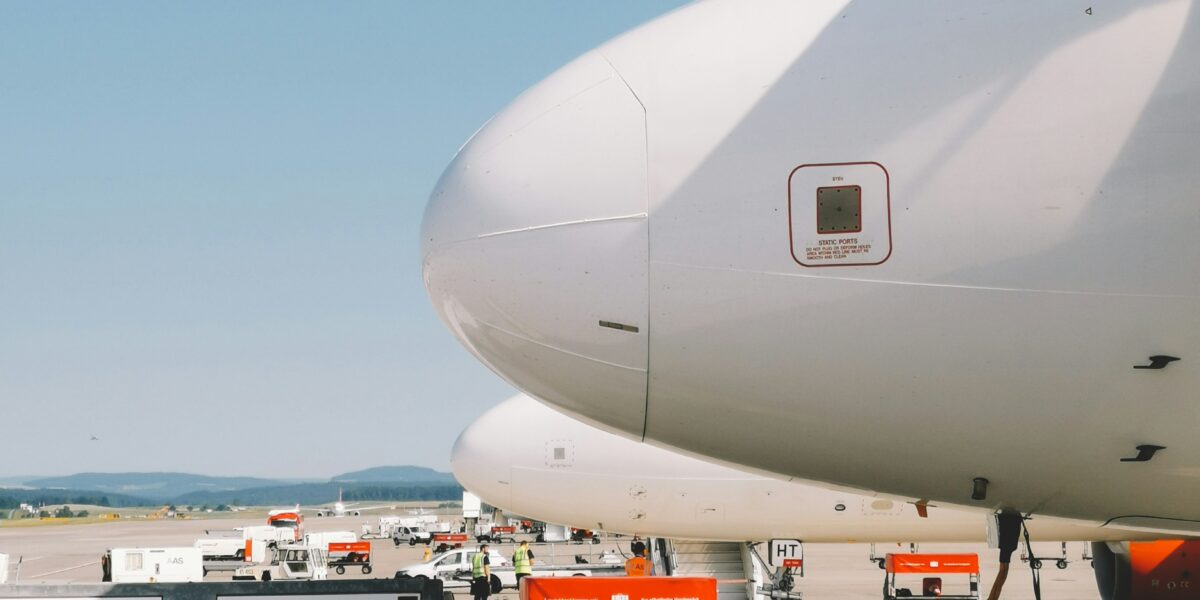
The Beluga’s main cargo hold is the defining feature of the aircraft’s design. The hold measures approximately 124 feet in length and up to 24.5 feet in width, with a maximum cross-section that can accommodate an A340 wing or a complete A320 fuselage section. Loading occurs through the hinged nose, which swings upward to provide an unobstructed opening — the entire forward fuselage above the cockpit lifts away, giving ground crews direct access to the hold from the front. The cockpit is positioned below and forward of the main cargo deck, which is why Beluga pilots have an unusual view from a flight deck surrounded by the aircraft’s lower forward fuselage rather than the nose position of a conventional aircraft.
Flight Deck and Systems
The Beluga’s flight deck is derived from the A300-600 on which the aircraft is based, retaining the two-crew cockpit with EFIS displays and fly-by-wire systems. The crew’s position below the main cargo deck gives the Beluga its characteristic profile — the bubble of the upper cargo fuselage sits behind and above the cockpit rather than around it as in a conventional aircraft.
The BelugaXL: Larger Capacity for A350 Components
Airbus developed the BelugaXL as a successor to the original Beluga fleet specifically to accommodate A350 XWB wing sections, which are too large for the original Beluga. The BelugaXL is based on the A330-200 freighter airframe and features an even larger cargo cross-section — approximately 18% more cargo volume than the original Beluga. First, you should understand that the BelugaXL’s development was driven directly by A350 production ramp-up requirements — at least if you’re following aerospace logistics, because the A350’s larger carbon fiber wing sections created a dimensional constraint that the existing Beluga fleet simply could not accommodate, and the BelugaXL program was Airbus’s solution to avoid a logistics bottleneck that would have capped A350 production rates.
Operations and Crew
The Beluga fleet operates on a tightly scheduled rotation connecting Airbus production sites, with flights timed to support the drumbeat of production at each final assembly line. Cargo loading and unloading is a precision operation — positioning a 17-meter wing section or a complete fuselage barrel inside the cargo hold requires specialized ground equipment, trained handling crews, and exact positioning to maintain aircraft balance within the center-of-gravity envelope. The aircraft’s environmental control system maintains temperature and humidity conditions appropriate for the composite and metallic aircraft components being transported, protecting the cargo from the thermal and moisture extremes of high-altitude flight.


Stay in the loop
Get the latest aviation news updates delivered to your inbox.