Night Currency vs Night Proficiency — What Pilots Miss
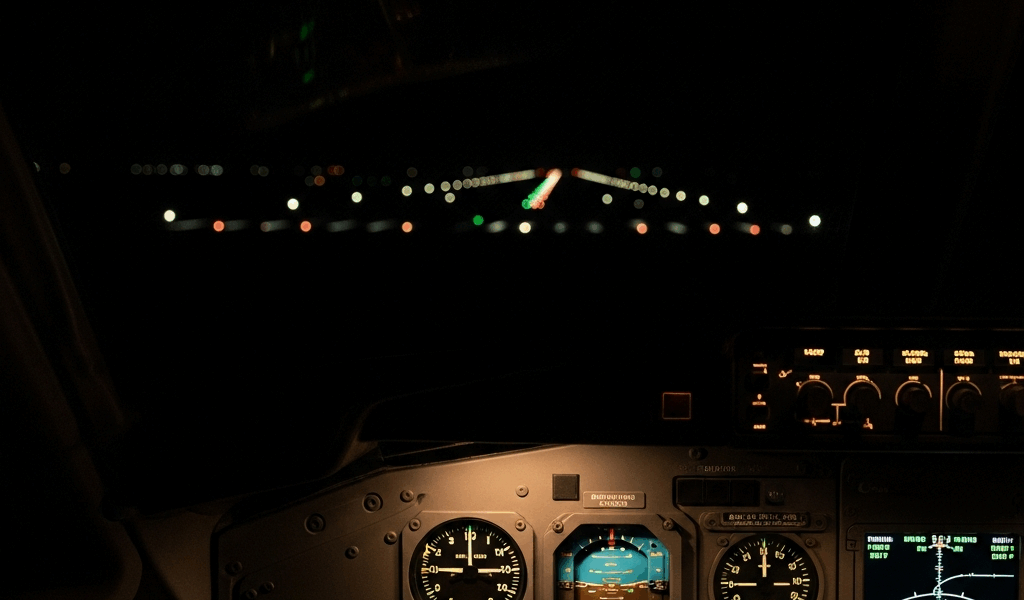
Night flying has gotten complicated with all the complacency flying around. And I mean that literally — I was one of those pilots. Early in my private pilot days, I treated 14 CFR 61.57(b) like a hall pass. Three landings, logged, done. Passengers loaded, off we go. It took one genuinely unsettling approach into an unfamiliar airport — moonless November night, no visual references, runway appearing about 200 feet lower than I expected — to understand how badly I’d confused a legal minimum with actual readiness. Nobody got hurt. But I aged a little that night, and I haven’t looked at night currency the same way since.
What Night Currency Actually Requires
The rule is simpler than pilots sometimes remember. Three takeoffs and three full-stop landings — touch-and-goes count — completed at night, within the preceding 90 days. That’s it. “Night” means the period between one hour after sunset and one hour before sunrise. You can find it in 14 CFR 61.57(b) if you want to read it yourself, which honestly takes about forty-five seconds.
But what is night currency, really? In essence, it’s a legal floor. The minimum threshold below which you cannot carry passengers after dark. But it’s much more than that — or rather, it’s supposed to be, and most pilots treat it like it isn’t.
Probably should have opened with this section, honestly — because most pilots already know the rule and assume knowing it is the same as being prepared by it. It isn’t. Three calm-evening landings at your home field checks the regulatory box. It does not measure your judgment, your scan technique, or your ability to handle conditions that are genuinely hard.
Why Currency Does Not Equal Proficiency
Here’s a scenario. A VFR pilot — let’s call him current — maintains night currency by doing three touch-and-goes at his home airport every 80 days or so. Knows that runway cold. Knows the pattern altitude, the PAPI angles, the way the lights blur slightly in humidity. Saturday evening in October, he agrees to fly a friend 90 miles to an unfamiliar airport. Destination sits in a valley. Dark terrain on three sides, minimal ramp lighting, a single VASI on runway 28.
Nothing about those three recent landings prepared him for that approach. The visual references are different. The depth perception cues are different. That quiet confidence built from repetition — completely absent. He’s legal. He is not proficient. That’s what makes this distinction so dangerous to pilots who fly recreationally and only occasionally venture beyond their home field.
Proficiency is what currency looks like when it’s backed by actual varied practice. No logbook endorsement exists for it. No examiner signs off on it. The pilot owns it entirely — which is exactly why so many pilots skip building it at all.
The Night Hazards Currency Ignores
The FAA currency requirement says nothing about the following risks. Each one is real, well-documented, and waiting for pilots who show up legal but underprepared.
- Black hole illusion — Approaches over dark, featureless terrain — water, unlit fields, desert — strip away the visual slope cues pilots depend on. The runway appears to float. Pilots fly these approaches consistently low without realizing it. A standard three-degree glidepath can feel like a ten-degree dive when there’s nothing else to look at. This one has killed people.
- Degraded depth perception — Human eyes need contrast and familiar reference points to judge distance accurately. At night, those inputs drop by 70 to 80 percent compared to daylight conditions. Flare height judgment degrades. Runway distance judgment degrades. The landings you log at a brightly lit home field don’t simulate this — not even close.
- Spatial disorientation — The vestibular system cannot distinguish between a level turn and a gradual bank without visual confirmation. Outside references disappear at night. Pilots who rarely fly actual or simulated IMC are especially vulnerable during even brief distractions in the pattern.
- Traffic detection — Spotting conflicting traffic at night means scanning for lights, not aircraft shapes. Pilots who primarily fly day VFR tend to underestimate how much slower and more deliberate that scan needs to be after dark.
- Fatigue compounding — Night flights frequently happen at the end of a long day. Fatigue amplifies every other risk on this list. Decision-making degrades. Scan discipline slips. The currency requirement has no fatigue component whatsoever — zero.
How to Actually Build Night Proficiency
As someone who spent years treating night flying as just daytime flying with the lights off, I learned everything there is to know about this distinction the hard way. Today, I will share it all with you — or at least the parts that actually changed how I fly.
Frustrated by vague guidance from the ACS about “night proficiency,” I started building my own personal standard using a beat-up Cessna 172N, a CFII named Gary who had approximately zero patience for sloppy technique, and a deliberate habit of flying into airports I’d never seen before. That approach eventually evolved into the personal proficiency framework working pilots I know recognize and actually use today.
While you won’t need a full instrument rating to fly nights safely, you will need a handful of specific habits and a willingness to be honest with yourself about where your gaps are.
Fly with a CFII periodically. Not just for recurrency — for honest feedback in conditions that challenge you. A night dual flight every six months, even just an hour of pattern work at an unfamiliar field, resets your personal baseline in ways solo flying simply can’t. Expect to pay somewhere between $150 and $250 in dual time depending on your aircraft and CFI rate. That’s not much against what you’re protecting.
Seek out unfamiliar airports deliberately. First, you should build a list of airports within 50 miles you’ve never landed at — at least if you actually want to close the gap between currency and proficiency. Fly in, grab coffee at the FBO, fly home. Your home field gives you false confidence. Strange fields reveal the gaps your home field hides.
Include simulated instrument conditions. If you’re instrument rated, practice night approaches under the foggles — a Sporty’s Pilot Shop model runs around $20 and works fine. If you’re not rated, brief yourself on partial panel and unusual attitude recognition before night cross-countries at minimum. The black hole approach and an inadvertent IMC entry look nearly identical in their early stages. Don’t make my mistake of learning that distinction in actual conditions.
Brief night-specific emergencies before every single flight. Where’s your best forced landing option on each leg? What does an engine failure in the pattern look like at night, over that dark patch west of the field? Spend three minutes on this. It’s not paranoia. It’s the kind of mental rehearsal that makes the decision automatic when it needs to be.
I’m apparently a “deliberate practice” person, and the structured approach works for me while casual currency-maintenance flying never actually improved my skills. So. Build a personal standard and hold yourself to it.
The Honest Question Before Every Night Flight
Before you load passengers into the right seat after dark, run yourself through a short personal audit. Not the IMSAFE checklist — you know that one. Something more pointed.
- When did I last fly into an airport I’d never seen in daylight — at night?
- How did my last night approach actually feel — confident and stable, or rushed and slightly off?
- If the VASI went dark on short final tonight, would I know what to do without hesitating?
- Have I briefed my passenger on what I need from them if something goes wrong?
- Am I flying tonight because it’s a good night to fly, or because I already said I would?
That last one is the hardest. Social pressure is the original get-there-itis fuel — and it hits hardest at night, when you’re tired, when backing out feels like an overreaction.
Currency gives you legal permission to fly. Proficiency gives you actual standing to fly well. The FAA handles the first part. The second part belongs entirely to you. The gap between them is where night flying earns its reputation — and where pilots who take it seriously separate themselves from pilots who just stay legal.
Three landings in the logbook is a start. Make sure it stays only a start.


Stay in the loop
Get the latest aviation news updates delivered to your inbox.