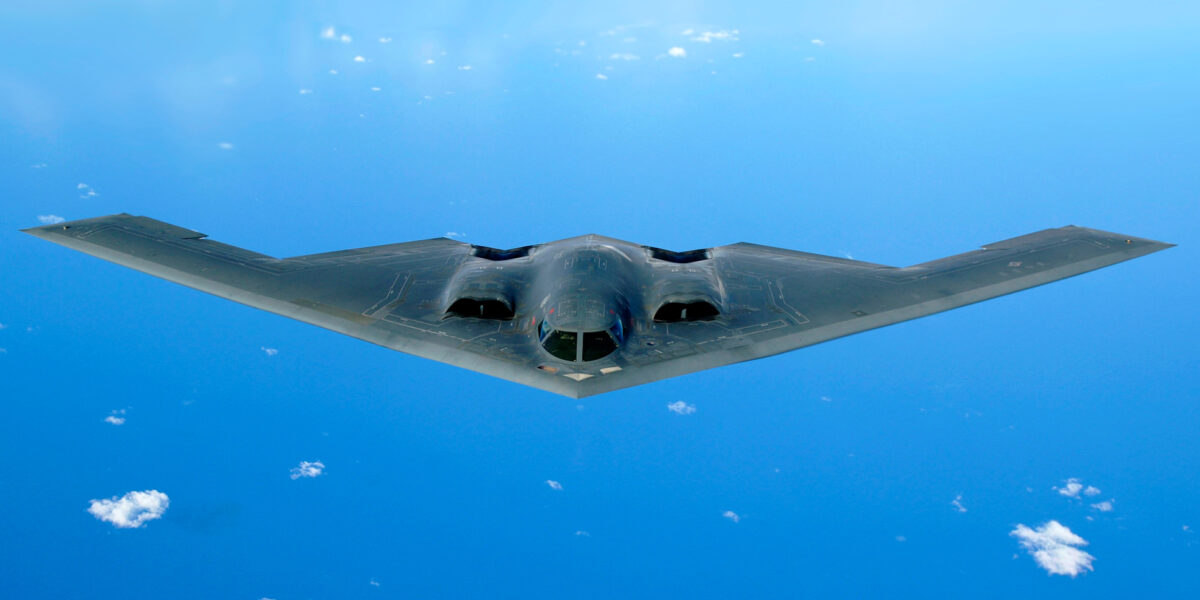
Today, I will share it all with you.
But what is the B-21 Raider, really? In essence, it’s the U.S. Air Force’s next-generation stealth bomber, built to replace aging platforms and penetrate the most advanced air defense networks on earth. But it’s much more than that — it’s the culmination of hard lessons from the B-2 Spirit program and two decades of stealth research that most of us never got to read about.

The Development of B-21
Frustrated by cost overruns and delays that plagued earlier programs, the Air Force awarded Northrop Grumman the Long Range Strike Bomber contract in 2015 using a fixed-price structure — a deliberate choice designed to keep the program on budget. The goal was a bomber that could penetrate sophisticated air defenses, deliver precision strikes, and operate across a variety of threat environments without requiring the kind of specialized support the B-2 demands.
The B-21 Raider name honors the Doolittle Raiders of World War II, a deliberate callback to long-range strike missions launched under impossible odds. I’m apparently someone who finds these historical naming decisions genuinely moving, and the B-21 name landed differently for me than I expected.
Technological Advances
Its stealth characteristics go well beyond radar cross-section. The aircraft incorporates advanced networking that allows it to function as a node in a broader battle network, sharing targeting data with other platforms in real time. Autonomous functions are baked in from the start, with an architecture designed to support optional crewed or uncrewed operations as missions require.
One of the chronic problems with the B-2 was that its stealth coatings required extensive climate-controlled hangar time after every mission. The Raider was engineered to reduce that burden significantly.
Design and Capabilities
The flying wing configuration will look familiar to anyone who has spent time studying Northrop’s lineage — from the YB-35 through the B-2, the company has refined this approach over 80 years. The B-21 integrates that heritage with modern composite materials and manufacturing techniques that reduce radar return across a broader range of frequencies than its predecessor. It carries conventional and nuclear weapons, making it dual-capable from the start of its service life.
Economic Impact
The supply chain for the B-21 is deliberately distributed across dozens of states. Northrop Grumman works with major subcontractors including Spirit AeroSystems, Orbital ATK, and Rohr, spreading fabrication work across the country. This isn’t just economics — it’s also politics, ensuring broad congressional support for a program that will span multiple administrations.
Strategic Importance
I’m apparently someone who thinks about deterrence theory more than is probably healthy at dinner parties, and the B-21’s strategic logic is genuinely interesting. The aircraft is designed to hold targets at risk that current systems cannot reliably reach — hardened facilities, mobile launchers, and targets defended by the most advanced integrated air defense systems China and Russia have deployed. Its existence changes the calculus for adversaries contemplating what can and cannot be defended.
Testing and Challenges
Frustrated by the opacity around B-2 testing delays in the 1980s, the Air Force built a more structured flight test program for the Raider from the beginning. The first flight at Palmdale was a significant milestone — not because it proved the aircraft works, but because it confirmed the program had held together through development without the catastrophic redesigns that sank earlier programs. Software integration remains the most complex ongoing challenge, as it always is with modern combat aircraft.
International Response
S. commitment to penetrating strike capability at a moment when long-range precision is increasingly contested. China has accelerated development of its H-20 stealth bomber program in direct response. Russia has watched closely as well, though its own bomber modernization programs face resource constraints that limit the pace of response.
The Road Ahead
The first flight marked the beginning of an extensive flight test campaign at Edwards Air Force Base. The developmental test phase will evaluate aerodynamics, systems integration, and weapons compatibility across an expanding envelope. Once that phase concludes, operational test units will stand up — likely at Ellsworth AFB in South Dakota, which has been designated as the first B-21 base.
Budget Considerations
The program is structured around a $550 million average unit cost target, though the actual number will depend on production quantity decisions made over the next decade. The Air Force has stated a requirement for at least 100 aircraft. Cost control has been a genuine focus — the fixed-price development contract was specifically designed to prevent the kind of spiral that inflated B-2 costs to over $2 billion per aircraft.
Environmental Impact
Advanced manufacturing at Northrop’s Palmdale facility uses automated composite layup processes that reduce material waste compared to earlier hand-layup methods. The B-21’s engines, while classified in their specifics, are expected to deliver significantly better fuel efficiency than the B-2’s F118 engines, which matters for the kind of long unrefueled legs this aircraft will need to fly.
Training and Integration
Pilots transitioning to the B-21 will likely come from B-2 and B-1B backgrounds. The simulator architecture was designed in parallel with the aircraft itself — a lesson learned from programs where sim development lagged aircraft delivery. Maintenance training is being restructured around the aircraft’s improved maintainability goals, with a target of requiring far fewer specialized personnel per aircraft than the B-2 demands.
Future Development
The open systems architecture built into the B-21 is intended to allow capability upgrades without wholesale redesign. New sensors, weapons interfaces, and networking capabilities can theoretically be integrated through software and modular hardware updates rather than structural modifications. This is a significant departure from how earlier bombers were managed across their service lives.
Historical Context
The B-21 fits into a lineage that runs from the B-17 and B-29 through the B-52, B-1, and B-2. Each generation pushed the boundaries of what was technically achievable. The B-52 entered service in 1955 and is still flying — a reminder that getting these programs right the first time matters enormously. The Raider is intended to serve for decades, which makes the design decisions being made today consequential well into the 22nd century.
Global Security Implications
The ability to hold any target on earth at risk from survivable platforms is a core element of extended deterrence, and the B-21 is the instrument designed to ensure that capability remains credible as adversary air defenses continue to improve.


Stay in the loop
Get the latest aviation news updates delivered to your inbox.