
Today, I will share it all with you.
But what is a personal airplane, really? In essence, it’s any aircraft owned and operated primarily for personal transportation or recreation rather than commercial purposes — ranging from a Light Sport Aircraft that requires a sport pilot certificate to a Very Light Jet that requires a type rating. But it’s much more than the aircraft category. For the pilot who wants to go somewhere efficiently or simply values the freedom of flight, personal aircraft ownership changes the calculus of travel in ways that commercial aviation can’t match for certain trip profiles.
Types of Personal Airplanes
Light-Sport Aircraft (LSA) are the entry point — relatively affordable, simpler to fly, and accessible with a sport pilot certificate that requires fewer hours and has less restrictive medical requirements than a private certificate. The Cessna 162 Skycatcher and PiperSport are typical examples. The tradeoffs are real: two occupants maximum, daylight VFR only, and lower cruise speeds and range than certificated aircraft.
Single-engine piston aircraft are the workhorse of personal aviation. The Cessna 172 and Piper PA-28 Cherokee sit at the entry end; the Cirrus SR22 and Beechcraft Bonanza represent the performance end. These aircraft land on small strips including grass, handle short to medium trip distances effectively, and are available in an enormous range of used market options. Don’t make my mistake of anchoring to purchase price without modeling total cost of ownership — at least if you’re evaluating the economics seriously, because fuel, insurance, hangar, maintenance, and the eventual annual inspection costs add up in ways that change the value calculation substantially.
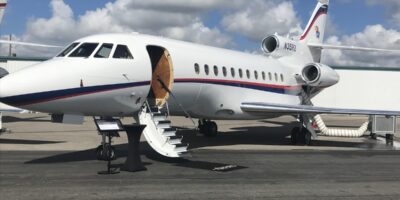
Twin-engine piston aircraft like the Beechcraft Baron and Piper Seneca add redundancy and capability at higher cost. Multi-engine rating is required. The safety argument for twins is more nuanced than it appears — a twin-engine failure in IMC at low altitude is genuinely survivable in ways a single-engine failure is not, but operating a twin on one engine requires proficiency that demands regular training to maintain. Very Light Jets represent the top of the personal aircraft category — Cirrus Vision Jet, Embraer Phenom 100 — requiring type ratings and operating costs that shift the economics toward the commercial aviation comparisons.
Cost Considerations
Purchase prices range from $100,000-$200,000 for a new LSA, $150,000-$600,000 for new single-engine piston, and $2 million to $5 million for VLJs. Operating costs run $40-$60 per flight hour for LSA, $100-$150 for single-engine piston, and $1,000-$1,500 for VLJs. Insurance premiums scale with aircraft value and pilot experience.
Pilot Training Requirements
Private pilot certificate requires 40 minimum flight hours (though the national average to checkride is 60-70) plus written exam and practical test. Sport pilot certificate requires 20 minimum hours with more restrictive operating privileges. Multi-engine rating adds 10-15 hours of type-specific training. Type ratings for jets require full simulator courses and flight training that can run $10,000-$30,000. The training investment is front-loaded — the ongoing cost of maintaining proficiency and currency through recurrent training is a continuing requirement, not a one-time expense.
Regulations and Compliance
FAA annual inspections are mandatory for certificated aircraft. The 100-hour inspection rule applies to aircraft operated for hire or instruction. Airworthiness Directives are mandatory compliance items — any AD that applies to your aircraft must be addressed on the schedule specified. Logbooks documenting all maintenance, inspections, and repairs must be current and accurate — first, you should verify the logbook history of any aircraft you’re considering buying is complete and consistent, because gaps or inconsistencies in records create regulatory problems and affect resale value.
The Future of Personal Aviation
Electric propulsion is advancing — Pipistrel and Bye Aerospace are developing battery-electric aircraft with meaningful training use cases, though range remains limited relative to piston aircraft. VTOL aircraft development is producing urban air mobility concepts that may change short-distance personal transportation. Autonomous flight systems are progressing, with implications for reduced pilot workload that may eventually change training requirements. The trajectory points toward a more accessible personal aviation environment — lower barriers to entry, more automation support for pilots — but current ownership economics still require serious evaluation of actual use patterns before the numbers work.


Stay in the loop
Get the latest aviation news updates delivered to your inbox.