Today, I will share it all with you.
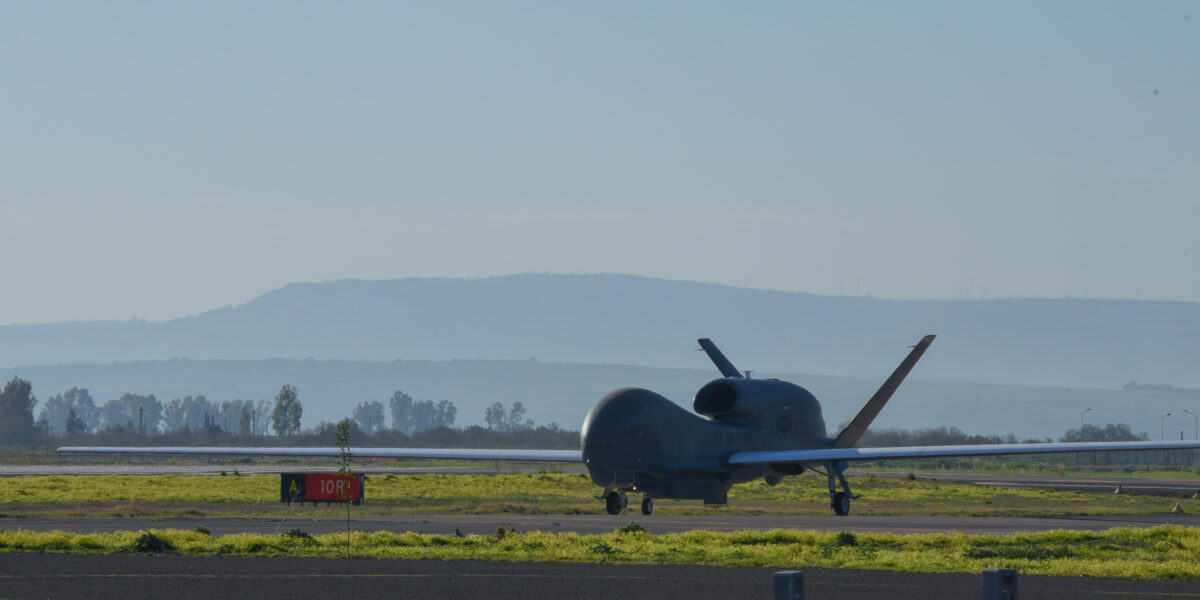
At its core, the RQ-180 is a high-altitude, long-endurance unmanned aerial vehicle built by Northrop Grumman for the U.S. Air Force. It’s an ISR platform — intelligence, surveillance, and reconnaissance — and by most accounts, it’s the stealthiest drone that’s ever been produced. The program is deeply classified, which means a lot of what we know comes from leaks, sightings, and educated guesswork from folks in the defense community. But there’s enough out there to paint a pretty solid picture.
Why the Air Force Needed Something New
The backstory here matters a lot. For years, the military relied on drones like the RQ-4 Global Hawk and the MQ-9 Reaper for aerial reconnaissance. They did great work in permissive environments — think Afghanistan or Iraq, where nobody was shooting sophisticated surface-to-air missiles at them. But the strategic landscape shifted. The Pentagon started looking hard at near-peer adversaries — countries with modern radar networks, integrated air defenses, the whole nine yards.
Those older drones? They’d get swatted out of the sky in contested airspace. The Air Force needed something that could fly deep into denied territory without being detected, gather intelligence, and come home. No pilot at risk. No diplomatic incident if things went sideways. That’s the gap the RQ-180 was designed to fill, and from what we’ve seen, it fills it remarkably well.
The Flying Wing Design
I find the engineering side of this genuinely fascinating. The RQ-180 reportedly uses a flying wing configuration — think B-2 Spirit, but unmanned and optimized for reconnaissance rather than bombing runs. That shape isn’t just for looks. A flying wing minimizes your radar cross-section dramatically. There are no vertical stabilizers sticking up, no hard angles bouncing radar energy back to the receiver. It’s about as clean as an airframe gets.
- The stealth characteristics let it slip through contested airspace without lighting up enemy radar screens — that’s the whole point of the program.
- A flying wing also reduces acoustic and thermal signatures, which adds additional layers of concealment beyond just radar evasion.
- I’d bet good money they’re using next-generation radar-absorbing materials and coatings, probably stuff we won’t know about for another decade.
The aerodynamic efficiency of a flying wing is also worth mentioning. You get incredible range and endurance from that design. Less drag means you burn less fuel, and that translates directly into longer time on station. For a reconnaissance platform, loiter time is everything.
What Can It Actually Do?
Here’s where things get murky, because the specific sensor packages are classified. But based on what’s been reported, we’re talking about a drone that can conduct electronic intelligence gathering, signals intelligence collection, and high-resolution imagery — ELINT, SIGINT, and IMINT for the acronym enthusiasts out there.
The high-altitude operational ceiling is a big deal. We’re likely talking 50,000 feet or above, well beyond the reach of most conventional air defenses. From up there, the RQ-180 can survey enormous swaths of territory. It can linger over areas where satellite coverage might be spotty or where you need persistent, real-time monitoring rather than periodic satellite passes. That persistence changes the intelligence game completely.
Strategic Value in Today’s World
The strategic importance here can’t be overstated. We’re living in an era of great power competition. Multi-domain operations are the doctrine of the day, and having an asset that can provide real-time situational awareness deep inside an adversary’s airspace? That’s invaluable for any combatant commander.
This isn’t just about collecting intelligence, either. It’s about the confidence to make decisions when the stakes are highest. The RQ-180 gives leadership eyes in places they’ve never had persistent coverage before.
How It Stacks Up Against Other Drones
Let me put this in context. The RQ-4 Global Hawk is a fantastic ISR platform, don’t get me wrong. But it’s big, it’s not stealthy, and it would be in serious trouble over contested territory. The MQ-9 Reaper is a proven workhorse for strike and surveillance, but it flies lower, slower, and has essentially zero stealth characteristics. Neither platform can do what the RQ-180 was built to do.
I think of the RQ-180 as occupying a unique space between traditional reconnaissance drones and stealth bombers. It’s got the survivability of the latter and the sensor focus of the former. And because it’s unmanned, the risk calculus is completely different. Losing one is costly, sure, but it’s not an international incident the way losing a manned aircraft would be.
Modern Surveillance and Networked Warfare
Today’s battlefield demands ISR platforms that can handle encrypted communications, electronic warfare jamming, and rapidly shifting ground situations. The RQ-180 reportedly operates as a node within a broader networked architecture, feeding intelligence back to analysts and decision-makers in something close to real time. That connectivity is what makes modern surveillance actually useful — raw data is worthless if it can’t reach the right people fast enough.
What’s Next for the Program
Maintaining a stealth UAV like this is no joke. The operational security requirements alone are immense — you can’t exactly park it on a public tarmac. And there’s always the looming question of counter-stealth technology. Adversaries aren’t standing still. Low-frequency radars, passive detection systems, and other emerging technologies could challenge the RQ-180’s current edge.
But here’s what I find encouraging: the RQ-180’s existence pushes the entire field forward. It’s driving research into autonomy, into AI-assisted mission planning, into new sensor technologies. Whatever comes after it will be even more capable. I honestly think the RQ-180 represents a turning point — the moment unmanned stealth ISR went from concept to operational reality. And we’re all still catching up to what that means.
Recommended Aviation Gear
David Clark H10-13.4 Aviation Headset – $376.95
The industry standard for aviation headsets, trusted by pilots worldwide.
Pilot’s Handbook of Aeronautical Knowledge – $25.42
The official FAA handbook – essential reading for every pilot.
As an Amazon Associate, we earn from qualifying purchases.


Stay in the loop
Get the latest aviation news updates delivered to your inbox.