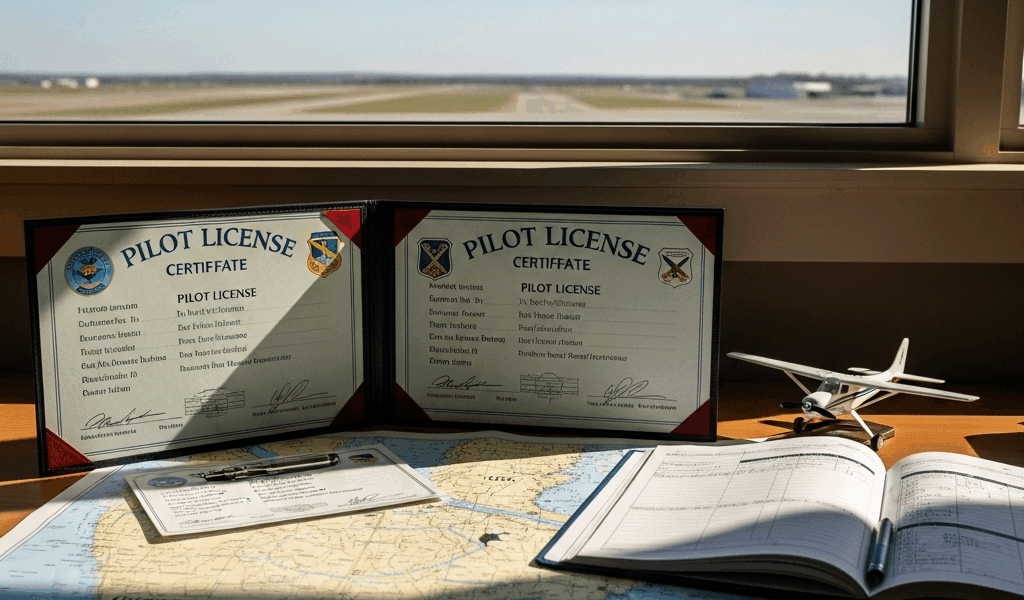
Private Pilot vs Sport Pilot License — Which Should You Get?
The private pilot vs sport pilot debate has gotten complicated with all the conflicting advice flying around — forums, YouTube comments, that one guy at your local FBO who swears he knows everything. As someone who has spent eleven years teaching students in the right seat, I’ve learned everything there is to know about this decision. Today, I will share it all with you.
Here’s what actually happens: a student climbs out of the Cessna 172, still buzzing, headset half-off, and asks me which certificate they should chase. Every single time. And for years, the standard instructor answer was some diplomatic shrug dressed up as wisdom — “it depends on your goals.” Hated that answer as a student. My students hate it now. So let’s skip the shrug entirely.
The short version: most people should get the private pilot certificate. But the reasoning matters more than the conclusion. So, without further ado, let’s dive in.
Sport Pilot — Fly Without a Medical Certificate
But what is the sport pilot certificate? In essence, it’s a streamlined path to the cockpit with fewer hours, less paperwork, and no FAA aviation medical exam required. But it’s much more than that — for certain pilots, it’s the only realistic path to flying at all.
The FAA rolled this out in 2004. The pitch was straightforward: lower the barrier to entry for recreational flying. That’s what makes the sport pilot certificate endearing to us aviation enthusiasts — it strips away complexity and just gets you airborne.
Here’s what it actually gets you:
- You can fly light sport aircraft (LSA) — a defined category of small, simple planes
- No FAA medical certificate required — a valid U.S. driver’s license serves as your medical
- Day VFR flying only — no night flying, no instrument conditions
- One passenger maximum
- Minimum 20 hours of flight time to qualify (15 with an instructor, 5 solo)
- No flying over densely populated areas or in Class B, C, or D airspace without additional endorsements
The LSA category has hard limits — maximum takeoff weight of 1,320 lbs for land planes, stall speed capped at 45 knots, two seats maximum. Think Cessna 162 Skycatcher, Tecnam P92, Van’s RV-12. These aren’t toys. Real airplanes. They’ll genuinely take you places. But they are what they are.
The medical flexibility is the headline. Had a health scare? Controlled diabetes, certain heart conditions, vision issues that make you nervous about sitting across from an Aviation Medical Examiner? The sport pilot path lets you use your driver’s license instead. For some people, that isn’t a minor convenience. It’s the difference between flying and not flying, full stop.
The 20-hour minimum looks attractive on paper. At typical LSA rental rates — roughly $180–$220 per hour, plus $60–$80 per hour for instructor time — a sport certificate can realistically land under $5,000 if you’re a fast learner and the weather cooperates. That’s real money compared to the private pilot path.
Here’s where I’d push back, though. Twenty hours is a floor, not an average. Most of my students took 35 to 45 hours before they were genuinely checkride-ready — even for the sport certificate. The training doesn’t get easier just because the certificate requires fewer hours.
Private Pilot — Full Privileges
The private pilot certificate is what most people picture when they imagine learning to fly. It predates the FAA in its current form. It’s also the foundation for everything above it — instrument rating, commercial, ATP. Night flying, larger aircraft, more than one passenger, an instrument rating someday — none of that happens without the private pilot certificate first.
What you get:
- Fly any single-engine piston aircraft you’re rated for, including much larger and faster planes than LSA
- Night flying privileges
- Eligible to pursue an instrument rating (fly in clouds and low visibility with the right training)
- Up to five passengers in a six-seat aircraft
- Cross-country flying with fewer airspace restrictions
- 40-hour minimum flight time (20 with an instructor, 10 solo, plus specific cross-country and night requirements)
- Must hold a valid FAA medical certificate — Third Class at minimum
That 40-hour minimum is, again, a floor. National average to reach checkride standards sits closer to 60–70 hours. Renting a Cessna 172 at $155–$175 per hour wet — fuel included — plus instructor fees puts the realistic budget somewhere between $8,000 and $12,000. Some students finish around $7,000. Some spend $15,000. Weather gaps, scheduling chaos, and how fast material sticks all move that number.
Historically, the medical certificate requirement was the private pilot’s main disadvantage. Third Class medicals aren’t brutal for healthy people — about 30 minutes with an Aviation Medical Examiner, roughly $100–$150. But for pilots carrying certain medical histories, that exam could end the conversation entirely. That calculus, though, changed in a big way.
The BasicMed Factor
Probably should have opened with this section, honestly — because it reframes everything.
May 2017. The FAA introduced BasicMed, a streamlined medical program letting private pilots fly without a traditional FAA medical certificate. Here’s how it works: complete an online medical education course through AOPA — about 2.5 hours — then get a physical from any state-licensed physician. Not an AME. Your regular family doctor. Fill out one form. Done.
Under BasicMed, a private pilot can fly:
- Any aircraft with a max certificated takeoff weight under 6,000 lbs
- Up to six seats (no more than five passengers)
- Below 18,000 feet MSL
- Within the U.S., Bahamas, Canada, and Mexico
The physical needs repeating every 48 months. The online course every 24 months. That’s the whole thing.
I’m apparently the guy who talks about BasicMed constantly, and my students find it works for them while the traditional AME process never sat right with them mentally — even when they’d probably pass. The anxiety alone was steering people toward the sport certificate for no good reason.
Frustrated by years of contradictory advice he’d found online, a retired engineer — mid-60s, controlled high blood pressure — walked into my office a few years back convinced he had to go sport pilot. He’d nearly talked himself out of flying altogether. We went through BasicMed together, step by step. His internist handled the exam in a single appointment. He’s now a private pilot flying a Piper Cherokee 180 on weekend trips. Don’t make my mistake of not leading every consultation with this information.
BasicMed didn’t completely erase the sport pilot’s medical advantage. If you genuinely cannot pass even a basic physician’s physical, the driver’s license standard is still more permissive. But for the vast majority of students who were nervous about the FAA medical process specifically, BasicMed closes the gap — substantially.
The Verdict
Here’s what I actually say in the debrief after a first lesson, headsets on the hook, engine cooling on the ramp.
If your only goal is recreational daytime flying — weekend hops to nearby airports, scenic routes over familiar terrain, the simple satisfaction of being in the air — and you want to get there fast and cheap, the sport pilot certificate is a legitimate choice. You’ll spend less money, less time, and if LSA airplanes are genuinely all you ever want to fly, you won’t hit the ceiling of that certificate.
For everyone else — get the private pilot certificate.
The extra minimum hours buy you a lifetime of expanded options. Night flying alone is worth it. I’ve lost count of the sport certificate holders who called me two years post-checkride wanting to add night flying, only to find out they’d need to start over with a private pilot certificate to do it right. Expensive conversation. Frustrating one. The instrument rating eligibility matters too — most new pilots swear they’ll never want one, right up until weather forces their first 180-degree turn home. Private pilot keeps that door open. Sport pilot closes it permanently.
Motivated by a genuine love of flight rather than any single destination, most student pilots eventually want more than the sport certificate offers. A family event four states away. A Piper Arrow rental on vacation. Flying home after dinner runs late. None of that happens on a sport certificate.
Sport pilot certificate might be the best option, as this decision requires an honest assessment of your actual limitations. That is because the certificate solves a specific, narrow problem really well — true medical limitations, a hard budget ceiling under $5,000, zero interest in flying anything beyond a small LSA. Those are real scenarios. But if you’re a typical student with a general love of aviation and no specific medical concerns, the private pilot certificate with BasicMed as your backstop is the better investment. Not close.
Get the private. You can always fly light sport aircraft on a private pilot certificate. The reverse isn’t true.


Stay in the loop
Get the latest aviation news updates delivered to your inbox.