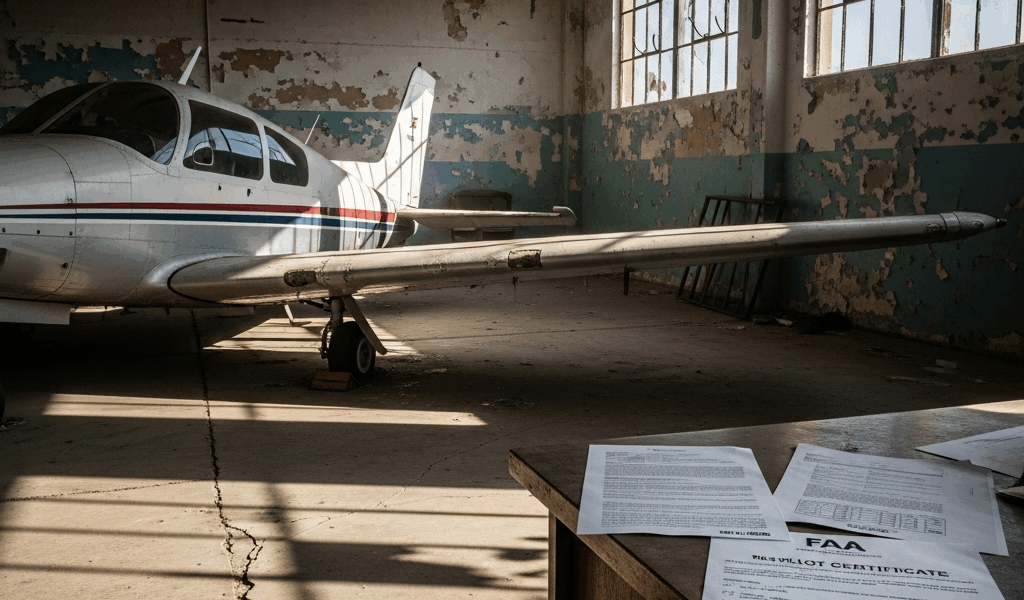
The Difference Between Suspension and Revocation
I’ve watched pilots lose sleep over a single enforcement letter from the FAA, and honestly, most of them don’t understand what they’re actually facing. That’s the real problem. You can lose your pilot license in two very different ways—suspension and revocation—and the distinction changes everything about your future in aviation.
Suspension is temporary. You’re grounded, sometimes for six months, sometimes for five years, but there’s a finish line. The FAA pulls your certificate, you wait out the punishment period, and then you can apply for reinstatement. It stings. Your logbook gets marked. Your insurance rates climb. But you’re not permanently exiled from flying.
Revocation is permanent. That certificate is gone for good.
The regulatory framework lives in 14 CFR Part 61, though the FAA doesn’t always advertise which violations cross that line from “we’re suspending you” to “we’re revoking you permanently.” Here’s what actually matters: suspension happens when the FAA wants to punish a lapse in judgment or a procedural violation. Revocation happens when they decide you’re a fundamental safety risk—someone whose behavior or judgment can’t be trusted, ever.
A pilot I knew got suspended for 90 days after flying into known icing without the proper rating. Bad decision, absolutely. But he got his certificate back, took an upset recovery course, and became more cautious. That’s suspension working as intended.
Compare that to the pilot who falsified maintenance records on an aircraft that later had a mechanical failure. That’s not a lapse in judgment. That’s deliberate deception that endangered lives. The FAA didn’t suspend that certificate. They revoked it.
Five Violations That Lead to Permanent Revocation
Not every violation ends with permanent revocation, but these five categories almost always do. Understanding the difference between “I made a mistake” and “I did something the FAA considers fundamentally disqualifying” could change how you approach your flying life.
Operating Under the Influence of Drugs or Alcohol
This one seems obvious, yet the FAA sees it constantly. Operating an aircraft while impaired—whether from alcohol, cannabis, prescription medications, or illicit drugs—is automatic revocation territory. There’s no negotiating position here. A pilot operating under the influence isn’t just risking themselves; they’re controlling a potential missile carrying passengers or cargo.
The FAA treats this with zero tolerance. If you’re convicted of a DUI or DWI, and that conviction can be connected to flight operations—even if you weren’t actively flying at the arrest moment, but the impairment occurred within 12 hours of a flight—revocation follows. Some pilots have tried arguing the DUI wasn’t related to flying. The FAA doesn’t care. The conviction itself, combined with your certificate, triggers permanent revocation under 14 CFR 61.15.
Falsifying Medical Certificates or Logbooks
Probably should have opened with how serious this is, honestly. I’ve seen pilots who lied about medical conditions on their medical certificate applications think they’d get suspended. They didn’t. They got revoked.
When the FAA discovers you concealed a heart condition, psychiatric history, DUI arrest, or medication use during your medical exam, they’re not just revoking your medical certificate—they’re revoking your pilot certificate too. The assumption is straightforward: if you lied about your health, you’re fundamentally dishonest. If you’re fundamentally dishonest, you can’t be trusted with a certificate.
Falsified logbooks follow the same logic. Your logbook is your record of experience, training, and currency. Inflating your hours or claiming you trained for a rating you never completed creates a false foundation for your entire certificate. Take the 2019 ATP candidate who got caught adding 800 fabricated hours to his logbook. The FAA didn’t just revoke his pilot certificate—they initiated enforcement against his flight instructors and the school that processed his application. Revocation was the baseline consequence.
Operating Without a Required Medical Certificate
This surprises people, honestly. You might think operating without a valid medical is a suspension offense—a procedural violation. Sometimes it is. But if you knowingly flew without a valid medical certificate, or if you continued flying after your medical expired while knowing about the expiration, the FAA can (and often does) pursue permanent revocation.
The key word is “knowingly.” An honest mistake—your medical lapsed and you genuinely forgot—might result in a fine and a suspension. But flying multiple times, deliberately, without the required medical? That demonstrates knowing disregard for safety regulations. Revocation follows.
Careless or Reckless Operation Resulting in Injury or Death
Operating an aircraft in a manner that endangers persons or property is prohibited under 14 CFR 91.13. When that reckless operation actually causes injury or death, permanent revocation is the standard outcome.
Frustrated by unsafe flying he witnessed constantly, I followed a 2018 case involving a pilot who performed unauthorized aerobatics at low altitude over a populated area. He hit a house’s antenna, lost control temporarily, and came close to hitting the structure itself. No one died, but people were endangered. The FAA revoked his certificate permanently. His argument—that he was trained in aerobatics and thought he was performing safely—didn’t matter. The decision to perform aerobatics in that airspace, at that altitude, over people was inherently reckless.
If someone actually dies in the crash? Revocation is virtually guaranteed. The FAA’s position is clear: if your actions led to fatality, your judgment is permanently compromised in their view.
Felony Convictions Involving Moral Turpitude
Felonies involving moral turpitude—crimes of dishonesty, violence, or depravity—trigger automatic revocation under 14 CFR 61.15(d). Drug trafficking, fraud, assault, even certain DUI felonies fall into this category. The FAA’s reasoning is straightforward: if you’re capable of committing crimes that demonstrate fundamentally dishonest or violent character, your presence in a cockpit represents an unacceptable risk.
This doesn’t require the crime to be aviation-related. A pilot convicted of embezzlement can lose their pilot certificate permanently. A conviction for assault can trigger revocation. The FAA sees the certificate as a privilege granted to trustworthy people, and felonies involving moral turpitude destroy that trust.
How the FAA Decides to Revoke vs Suspend
The enforcement process isn’t random. The FAA follows a structured path, and severity plus intent determine the outcome.
It starts with investigation. Someone reports a violation, or the FAA discovers one through audit or accident investigation. The FAA’s legal team builds a case, gathering evidence, witness statements, and documentation. This phase takes weeks or months.
Next comes the Notice of Proposed Certificate Action (NOCA). This is the FAA’s formal announcement that they intend to take action against your certificate. You receive it by certified mail. It specifies exactly which regulations you violated and what action the FAA proposes—suspension for two years, or permanent revocation, for example.
You then have the right to respond. Request an informal conference with the FAA, provide written arguments, or request a formal hearing before an Administrative Law Judge (ALJ). This response period typically lasts 30-60 days, though it can extend longer if you request a formal hearing.
Formal hearing? The entire process takes 6-18 months from the original incident to final order. Skip the hearing, and the FAA’s final order comes faster—maybe 90-120 days from the NOCA.
Severity and intent matter enormously in this process. A pilot who made a bad decision under stress might argue for suspension. A pilot who deliberately concealed information or acted with conscious disregard for safety faces revocation. The FAA looks at your history (clean record helps), your candor during investigation (lying makes it worse), and whether the violation was isolated or part of a pattern.
Can You Ever Get Your License Back After Revocation
Rarely. And when it happens, don’t expect a quick path back to the sky.
The FAA does allow pilots to apply for “Reapplication for Certificate Action” after revocation, but the bar is extraordinarily high. You must demonstrate—convincingly, with documentation—that the cause for revocation has been fundamentally resolved and won’t recur.
For alcohol or drug-related revocations, the FAA typically wants to see 1-2 years minimum of sobriety, plus evidence of sustained recovery (AA participation, counseling records, medical evaluation from an FAA-approved substance abuse professional). Even then, you won’t simply get your certificate back. You’ll need to retake the written exam, complete a checkride with an examiner, and possibly undergo additional training or evaluation.
For medical-related revocations, you need an updated medical certification and proof that the condition causing the original falsification has been treated and stabilized.
For falsification or recklessness, the FAA’s bar remains murky. There’s no clear timeline. Some pilots who were revoked for falsification have successfully reapplied after 3-4 years of demonstrating consistent honesty and integrity, but success rates are low—maybe 20-30% of applications that attempt this route. Many are denied.
The honest truth: if your certificate is revoked, plan on that being permanent. Reapplication is technically possible, but it’s a years-long process with no guarantee of success.
How to Avoid Being That Pilot
Prevention is infinitely simpler than fighting revocation.
Stay current. Flying outside your currency requirements is how pilots push into dangerous situations. Get your flight reviews completed on time. Maintain your medical certificate—renew it before it lapses. Many pilots don’t realize their medical is expiring; calendar reminders solve this entirely.
Keep honest logbooks. Every entry should be accurate. Your logbook is a legal document, and temptations to pad hours or claim experience you don’t have will haunt you the moment the FAA investigates anything in your file. It’s not worth it.
Don’t fly impaired. This includes alcohol, cannabis (even in states where it’s legal), prescription medications, and illicit drugs. If you’re uncertain about a medication’s effects on cognition or reaction time, ask your AME or call the FAA Aerospace Medicine hotline. The conservative answer is always correct.
Don’t fly into conditions you’re not trained for. Icing, thunderstorms, mountainous terrain, crosswinds beyond your experience—these situations kill pilots constantly. Your certificate doesn’t protect you from physics. Your humility does.
If you’re ever investigated by the FAA, be honest immediately. Contact an aviation attorney before any formal interview. Don’t make my mistake—getting caught in a lie during investigation is how pilots transform “maybe a suspension” into “definitely a revocation.” The cover-up is always worse than the original mistake.
Your pilot certificate is a privilege. Treat it accordingly, and you’ll keep flying. Treat it carelessly, and the FAA will make sure you never fly again.


Stay in the loop
Get the latest aviation news updates delivered to your inbox.