Today, I will share it all with you.
Both of these jets have shaped how the U.S. projects airpower, but they do it in completely different ways. One’s a pure-bred air superiority monster, the other’s the Swiss Army knife of the fleet. Let’s get into it.
Development and Design
The whole story of these two jets starts with what the military needed at the time, and those needs couldn’t have been more different.
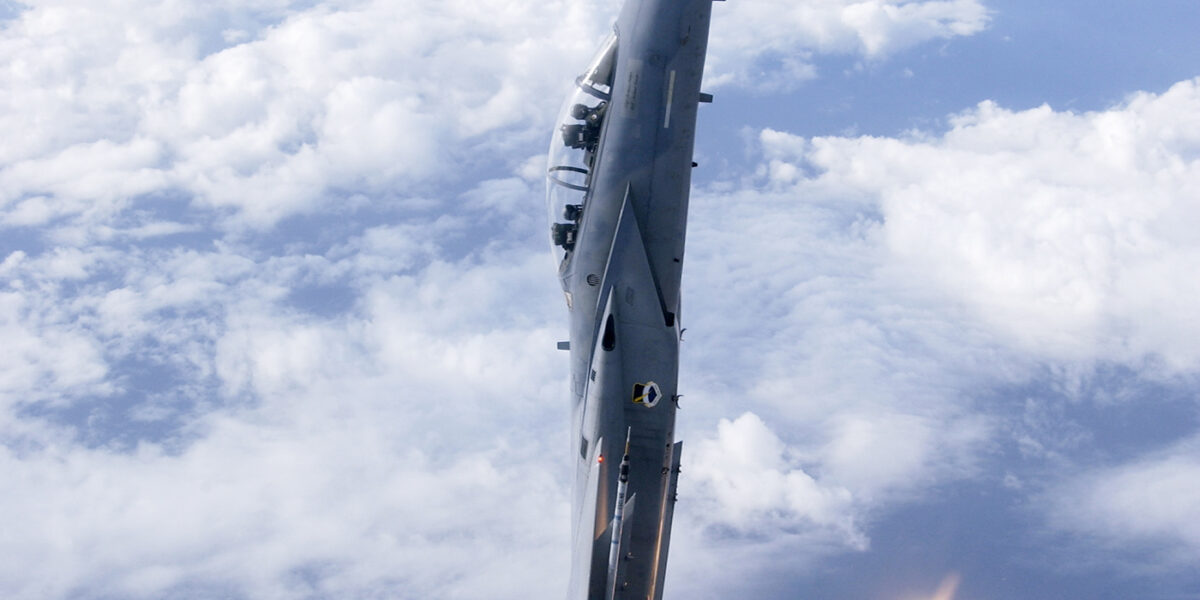
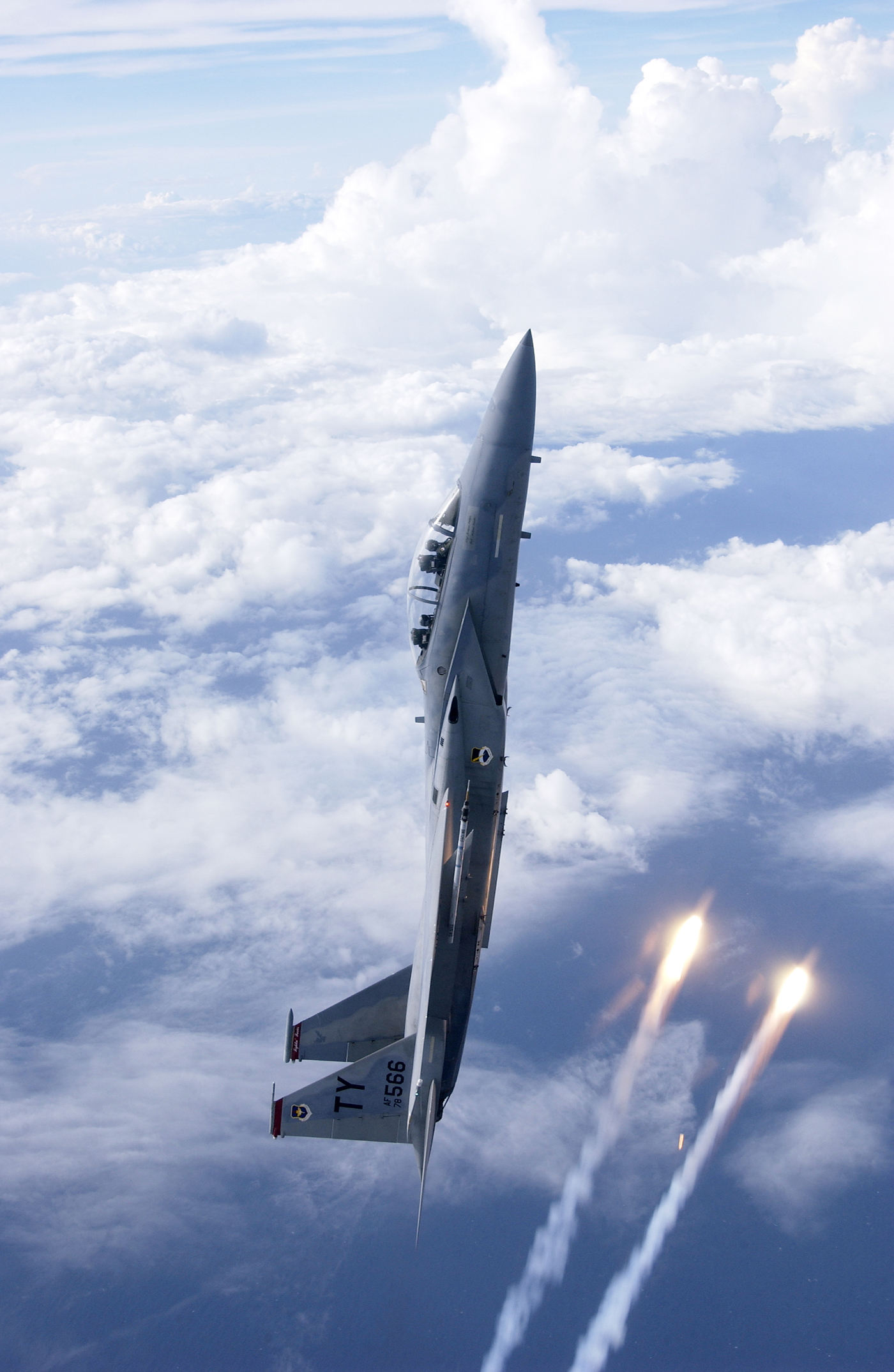
The F-15 Eagle came out of Cold War paranoia — and I don’t mean that as a negative. In the 1960s, the Soviets were pumping out MiG after MiG, and the U.S. needed something that could own the skies. McDonnell Douglas (Boeing swallowed them up later) built the F-15 with one goal in mind: air superiority. They gave it twin engines, blistering speed, sharp maneuverability, and a radar system that could find a needle in a haystack. Everything about the design screams “I’m here to win dogfights.”
The F/A-18 Hornet? Totally different animal. The Navy came knocking and said, “We need something that can do a bit of everything off a carrier deck.” Northrop and McDonnell Douglas teamed up, and what they built was a multirole fighter that could handle air-to-air combat and also hammer ground targets. The Marines liked it too, naturally. Its design had to balance agility with the kind of structural toughness you need when you’re slamming onto a carrier deck at 150 knots. That’s not a small ask.
Technical Specifications
Here’s where the F-15 flexes hard. It’s got two Pratt & Whitney F100 engines under the hood, and they push this thing past Mach 2.5. You read that right — Mach 2.5. Its climb rate? Over 50,000 feet per minute, which honestly sounds absurd when you say it out loud. With a wingspan of 42.8 feet and stretching 63.8 feet long, it’s not a small bird by any means.
The F/A-18 is a more compact package, and that’s by design. Its twin General Electric F404 engines get it up to around Mach 1.8 — slower than the Eagle, sure, but it wasn’t built to win drag races. It’s got a wingspan of 40.4 feet and is 56 feet long. The real trick is those folding wings. Ever tried to park a full-size jet on a carrier deck with dozens of other aircraft? Those folding wings aren’t a luxury, they’re a necessity.
Context is everything.
Avionics and Weaponry
If you’re an air superiority fighter, your radar better be phenomenal. The F-15 doesn’t disappoint. Its AN/APG-63 radar locks onto targets at ranges that would make most fighter pilots very nervous if they were on the receiving end. For beyond visual range engagements, it carries AIM-7 Sparrows and AIM-120 AMRAAMs. Get in close, and there’s AIM-9 Sidewinders waiting. Oh, and a 20mm M61 Vulcan cannon for when things get really personal.
The F/A-18 takes a different approach with its AN/APG-65 radar (upgraded in later blocks). It’s solid across multiple mission types, which is the whole point. What I find impressive is the loadout flexibility — this jet can carry air-to-air missiles, precision-guided munitions, and dumb bombs all on the same sortie if the mission calls for it. It’s got the same M61 Vulcan cannon, but the emphasis is really on being able to reconfigure for whatever the day throws at you. Want to do a morning CAP mission and an afternoon strike run? The Hornet’s your jet.
Operational History
The F-15 first flew in 1972, and its combat record is frankly ridiculous. During Operation Desert Storm, F-15 pilots racked up over a hundred confirmed aerial kills. A hundred. And the loss column? Basically empty in air-to-air. That’s the kind of stat line that makes other fighters jealous. It’s been in service for decades now, and with continuous upgrades, it keeps showing up to the party ready to go.
The F/A-18 took its first flight in 1978, and it’s been busy ever since. What I appreciate about the Hornet’s record is how it proved the multirole concept wasn’t just marketing hype. During Operation Iraqi Freedom, it was flying air superiority one day and dropping JDAMs the next. The ability to shift between roles on short notice gave commanders options they wouldn’t have had otherwise. That flexibility has proven itself over and over in real combat.
Upgrades and Variants
Both jets have evolved significantly, which is part of why this comparison stays interesting decades later.
The F-15 has spawned several variants, but the F-15E Strike Eagle is the one that really changed the game. It took the Eagle’s air dominance DNA and bolted on serious ground attack capability. The newer F-15EX Eagle II takes things even further with updated radar, improved electronic warfare suites, and fresh engines. Boeing keeps finding ways to squeeze more life out of this platform, and honestly, it keeps working.
On the Navy side, the F/A-18E/F Super Hornet was a massive leap forward. Better range, heavier payload, upgraded avionics — it addressed basically every complaint anyone had about the original Hornet. The Super Hornet added advanced electronic warfare capability that makes it a genuine threat in contested airspace. It’s become the backbone of Navy carrier air wings, and for good reason. You don’t get that role by accident.
Roles and Missions
I think this is where people get tripped up in the F-15 vs F-18 debate. They try to compare them one-to-one, but these jets were designed for fundamentally different jobs.
The F-15 is an air superiority machine, period. Everything about it — the engines, the radar, the weapons integration — serves that mission first. Yes, the Strike Eagle variant handles ground attack beautifully, but the original concept was “sweep the sky clean of enemy aircraft.” And it does that better than almost anything else flying.
The F/A-18 was built to be flexible from day one. Fleet air defense? Check. Close air support for Marines on the ground? Check. Deep strike missions? Also check. Can it do any one thing as well as a dedicated platform? Maybe not. But can any dedicated platform do everything the Hornet does? Absolutely not. That trade-off is the whole design philosophy, and it’s served the Navy incredibly well.
Training and Pilot Experience
I’ve talked to pilots from both communities, and the differences in mindset are fascinating.
F-15 drivers are all about energy management and weapons employment at range. Their training hammers BVR tactics, radar interpretation, and getting the first shot off before the other guy even knows you’re there. There’s a certain confidence that comes with flying a jet that’s never lost an air-to-air engagement — you can hear it when they talk about their aircraft.
F/A-18 pilots have to be a different kind of skilled. On top of learning air combat and ground attack, they’ve got to master carrier operations. Landing on a pitching deck at night in bad weather is no joke — ask anyone who’s done it. The versatility demanded of Hornet pilots means their training pipeline is broad. They can’t afford to be one-trick ponies, and that shapes a certain kind of aviator.
Global Presence
Both jets have found homes well beyond U.S. borders, which tells you something about how well they’ve performed.
The F-15 serves in Japan, Saudi Arabia, Israel, South Korea, and Singapore, among others. Israel’s record with the Eagle is particularly impressive — they’ve used it in actual combat with devastating effectiveness. When a country is looking for an air superiority guarantee, the F-15 is still near the top of everyone’s shortlist.
The F/A-18 has been adopted by Australia, Canada, Finland, Spain, Switzerland, and others. Its carrier capability isn’t always the selling point for these nations — it’s the multirole nature. When your air force budget only allows for one type of fighter, you want one that can do a bunch of different jobs. The Hornet fits that bill perfectly.
Cost and Production
Here’s the part nobody likes talking about but everyone has to: money.
The F-15 isn’t cheap. Each unit represents a serious investment, and the ongoing upgrades add to the lifetime cost. But when you look at what you’re getting — an undefeated air-to-air record, decades of proven performance, and a platform that keeps getting better — the price tag starts to make more sense. You get what you pay for in this business.
The F/A-18 has generally been the more budget-friendly option, especially when you consider that one airframe covers multiple mission types. You don’t need separate fleets of air superiority fighters and attack aircraft. The Super Hornet managed to add significant capability without blowing the budget, which is almost unheard of in defense procurement. Almost.
Future Prospects
So where do these jets go from here? Neither one’s riding into the sunset anytime soon.
The F-15 has new life with the F-15EX program. The Air Force is buying brand-new Eagles with the latest technology baked in — advanced electronic warfare, updated weapons integration, and improved sensors. It’s wild to think a design from the 1970s still has this much runway ahead of it, but that speaks to how right McDonnell Douglas got the fundamentals.
The F/A-18 Super Hornet will remain the Navy’s workhorse for years to come. Even as the Navy looks toward next-generation platforms, the Super Hornet will continue evolving with new systems and capabilities. Its role might shift as newer aircraft come online, but it’s not going anywhere fast. The Navy has too much invested and the airframe still has too much to offer.
At the end of the day, asking which jet is “better” misses the point entirely. They’re both exceptional at what they were designed to do. The F-15 owns the sky, and the F/A-18 does a bit of everything and does it well. Different missions, different strengths, same incredible level of engineering.
Recommended Aviation Gear
David Clark H10-13.4 Aviation Headset – $376.95
The industry standard for aviation headsets, trusted by pilots worldwide.
Pilot’s Handbook of Aeronautical Knowledge – $25.42
The official FAA handbook – essential reading for every pilot.
As an Amazon Associate, we earn from qualifying purchases.


Stay in the loop
Get the latest aviation news updates delivered to your inbox.