Icelandair Business Class Review
Transatlantic business class has gotten complicated with all the lie-flat seat comparisons, lounge access debates, and “is the upgrade worth it” calculations flying around. As someone who has spent years evaluating transatlantic premium products and specifically flying Icelandair on routes through Reykjavik, I learned everything there is to know about what their business class actually delivers. Today, I will share it all with you.
But what is Icelandair business class, really? In essence, it’s a premium product on a narrowbody-focused carrier that operates primarily transatlantic routes through Keflavik as its hub — a different proposition than the full-service long-haul business class products from carriers like Lufthansa or British Airways. But it’s much more than economy with extra legroom. For travelers who need something better than economy on a 5-8 hour Atlantic crossing but don’t want to pay full-service carrier business class prices, the Icelandair product deserves serious evaluation.

Booking and Check-In
Booking is clean and the Icelandair website handles the process clearly. Online check-in opens 36 hours before departure — early enough to confirm seat selection. Business class check-in at the airport uses dedicated counters that move quickly. The pre-departure communication is informative about what to expect onboard. That’s what makes the booking experience endearing to travelers who have dealt with airlines that treat pre-departure communication as an afterthought — Icelandair sets clear expectations.
Saga Lounge at Keflavik
Access to the Saga Lounge at Keflavik Airport is a meaningful perk for business class passengers transiting through Reykjavik. The lounge offers comfortable seating, Wi-Fi, a selection of food and beverages including alcohol, and a quiet environment away from the main terminal. Newspapers, magazines, and workstation access round out the amenities. The lounge quality is solid without being spectacular — it does what it needs to do, which is provide a better pre-departure experience than the main terminal.
Onboard Experience: Cabin and Seats
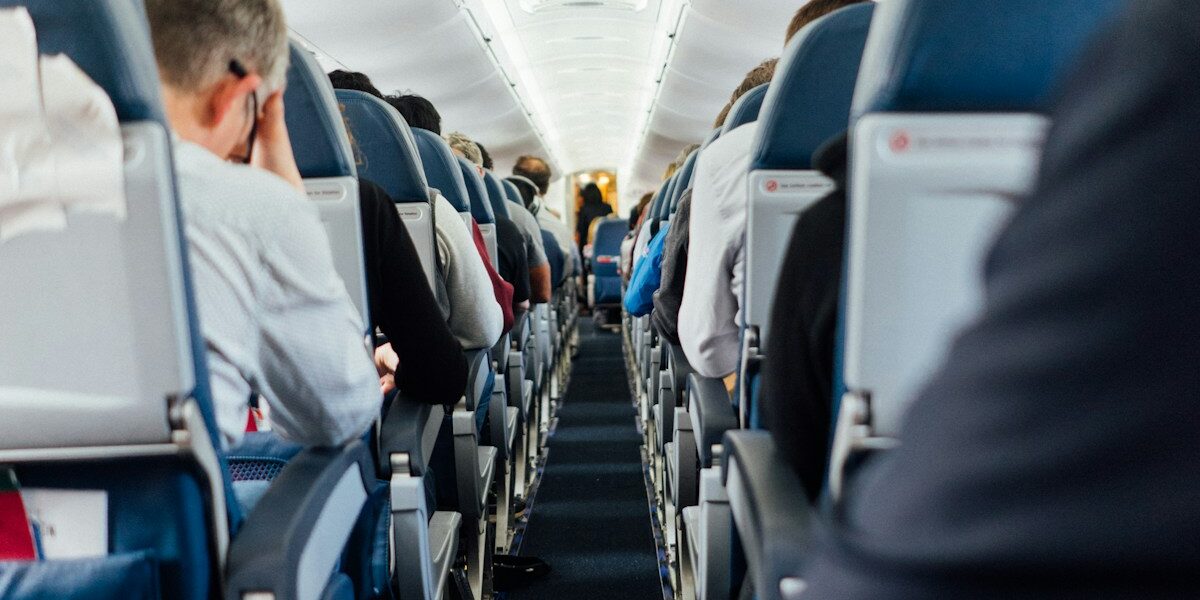
The B757 aircraft that Icelandair operates on many transatlantic routes configures business class in a 2-2 layout. The seats are wider than economy and offer meaningful recline — not flat-bed configuration, which is the significant product limitation compared to long-haul widebody business class. For a 5-6 hour crossing, non-flat seats are manageable. On overnight flights where actual sleep is the goal, the seat’s recline limitation matters more. Legroom is generous compared to economy and adequate for most travelers. Don’t make my mistake of expecting a widebody flat-bed experience on a narrowbody transatlantic carrier — the product is positioned correctly for what it is, but the comparison set matters for setting expectations.
Amenities and In-Flight Entertainment
Noise-canceling headphones and an amenity kit — eye mask, dental kit, skincare products — are provided at boarding. The personal entertainment screen has a reasonable content library for the flight duration. Interface is intuitive. Wi-Fi is available but not universally included in the fare, so check the current policy before counting on connectivity. The amenity kit level is appropriate for a transatlantic crossing without being the elaborate version that ultra-long-haul carriers provide.
Dining
The meal service starts shortly after takeoff. Two meal services on long-haul configurations. Pre-meal drink service covers wines, beers, and spirits. Meals are plated on ceramic with metal cutlery — the service presentation is appropriate for the cabin class. Icelandic and international dishes appear in the menu rotation with two or three main course options. Dietary preferences are accommodated with advance notice. The food quality is genuinely good rather than perfunctorily adequate — Icelandair takes its culinary offering seriously enough to make it a distinguishing feature of the product. Dessert and cheese selections are included.
Service
The cabin crew make regular rounds and respond to requests promptly. The service style is professional without being overly formal — a Scandinavian approach that values efficiency and genuine helpfulness over theatrical luxury-airline service rituals. Probably should have mentioned this earlier: if you’re comparing service against the full-service tier of carriers like Singapore or Swiss, Icelandair business class doesn’t reach that level. Within the context of what it is — a competitive transatlantic product on a carrier that has built its business on the Reykjavik hub model — the service is more than satisfactory.
Value for Money
The pricing for Icelandair business class is typically below the major European full-service carriers for comparable routes — that’s the value proposition. You get the lounge access, better seating, improved meal service, and dedicated check-in at a price point that makes sense against the alternatives. For medium-haul transatlantic routes where the seat limitation matters less because the flight is shorter, the Icelandair product competes well. For overnight long-haul crossings where sleep quality is the primary metric, the non-flat seat is a genuine limitation worth evaluating against the price differential versus lie-flat alternatives. First, you should compare the total door-to-door time on Icelandair through Reykjavik versus a direct flight on another carrier before booking — at least if the routing adds a Keflavik connection, because the total travel time comparison can change the value equation significantly.