
Icelandair economy offers a middle ground between ultra-basic and premium cabins. For transatlantic flights routing through Reykjavik, understanding what you get helps set expectations.
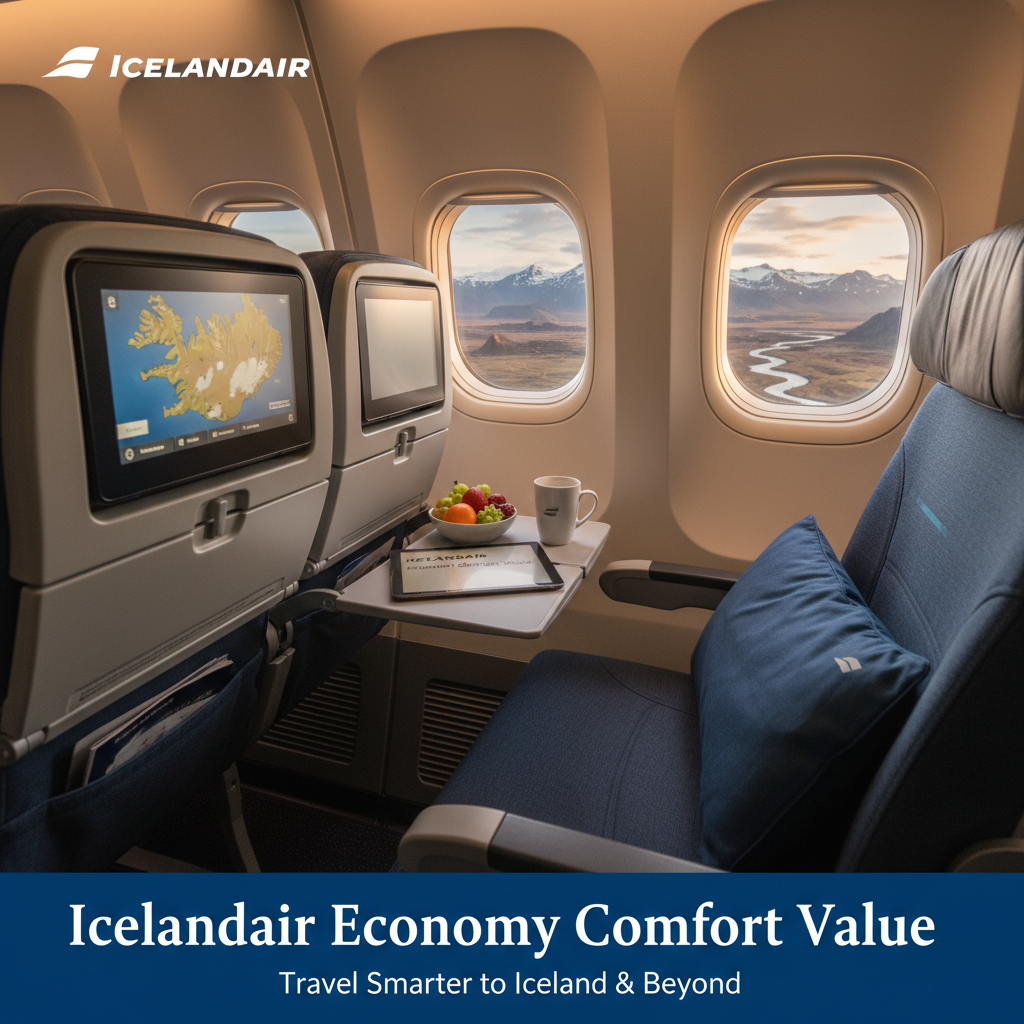
Seat Configuration
Standard economy seats run about 31-32 inches of pitch – comparable to other European carriers. Newer aircraft have improved seats over older fleet members. Width varies by aircraft type.
Iceland Stopover Option
Icelandair’s unique selling point is their free stopover program. Add up to seven nights in Iceland without increasing airfare. This turns a connecting flight into a destination. The stopover alone justifies considering Icelandair for some travelers.
Meal Service
Complimentary meals on transatlantic flights include Icelandic-influenced options. Quality exceeds many competitors’ basic economy offerings. Dietary accommodations require advance booking but are available.
Entertainment
Seatback screens with decent content selection. Newer planes have better systems than older fleet members. WiFi is available for purchase. Bring backup entertainment anyway – systems occasionally fail.
Saga Class Upgrade
Business class on Icelandair is Saga Class. Upgrade costs less than many competitors’ premium cabins. For the price difference, you get lounge access, better food, and lie-flat seats on long routes. Worth considering for red-eyes.
Keflavik Airport
All flights connect through Iceland’s main airport. It’s smaller and more manageable than major hubs. Duty-free shopping is notable. Connection times can be tight or very long depending on scheduling.
Route Network
Icelandair serves European and North American cities with Iceland as the hub. This routing adds time compared to direct flights but opens connections between markets other airlines skip.



Stay in the loop
Get the latest aviation news updates delivered to your inbox.