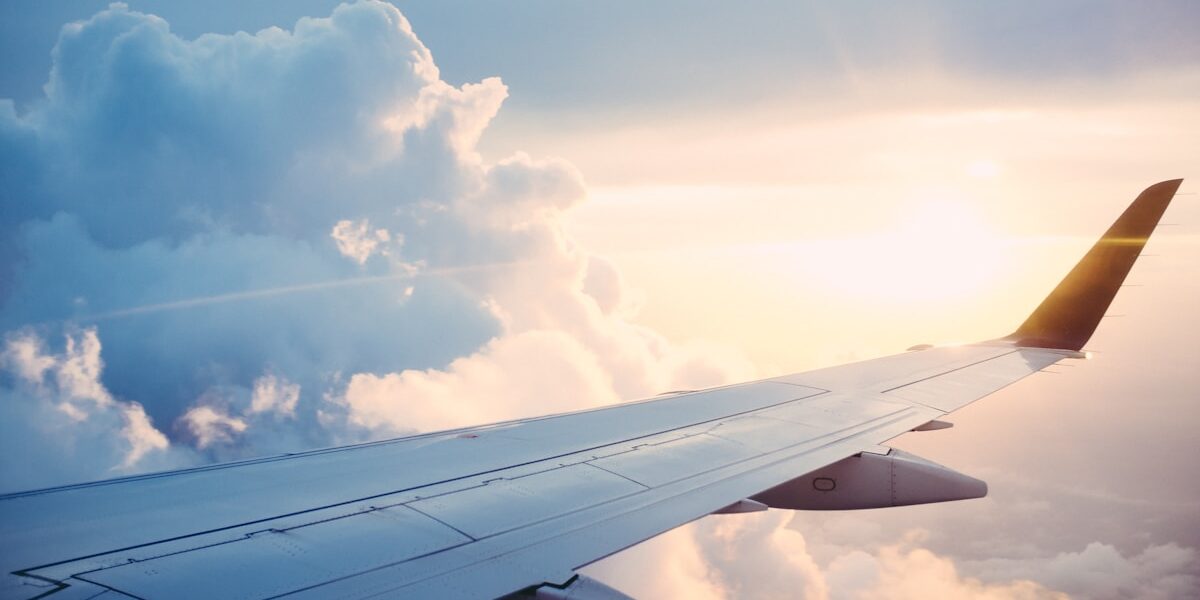
The four forces of flight are lift, weight, thrust and drag. Lift acts perpendicular to the flight path, weight acts toward the center of Earth, thrust generally pushes the aircraft forward, and drag opposes its motion through the air. In straight-and-level, unaccelerated flight, lift equals weight and thrust equals drag. When the forces are unbalanced, the aircraft accelerates in the direction of the net force.
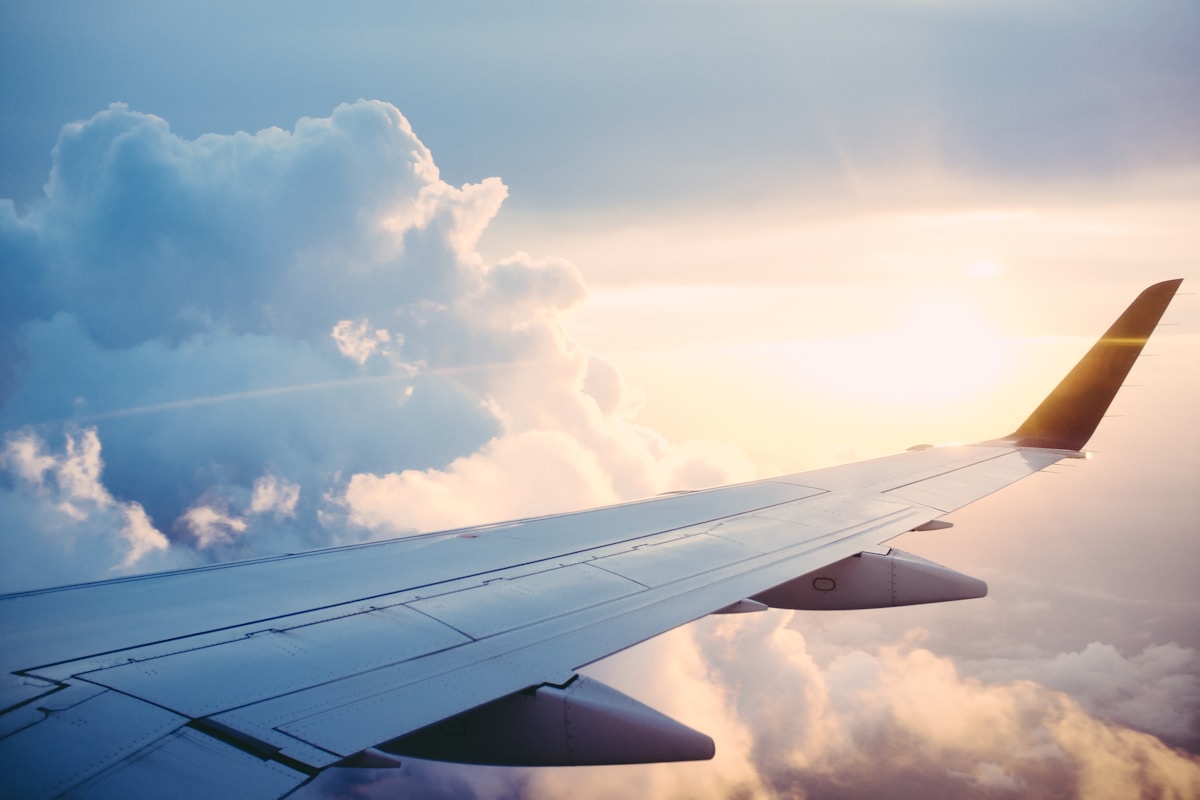
The four forces at a glance
| Force | Usual direction | What determines it |
|---|---|---|
| Lift | Perpendicular to the flight path | Wing shape and area, angle of attack, air density and airspeed |
| Weight | Toward Earth’s center | Aircraft mass, fuel, occupants and cargo |
| Thrust | Generally forward along the propulsion axis | Engine/propeller type, power setting and flight condition |
| Drag | Opposite the flight path | Aircraft shape, surface, configuration, air density and airspeed |
These directions matter. Lift is not always “straight up,” and drag is not always “straight back” relative to the horizon. NASA defines lift and drag relative to the aircraft’s flight path, while weight always points toward Earth.
Lift
Lift is the aerodynamic force perpendicular to the relative wind or flight path. Most of an airplane’s lift comes from its wings, although the entire aircraft can contribute. The pressure and airflow distribution around the wing combine into a total aerodynamic force; the component perpendicular to the flight path is lift.
Lift depends on air density, true airspeed, wing area, the wing’s lift coefficient and therefore angle of attack and configuration. Increasing angle of attack generally increases lift coefficient until the wing reaches its critical angle of attack. Beyond that point, airflow separation increases and the wing stalls. A stall is defined by excessive angle of attack—not by one fixed airspeed.
In a level turn, the lift vector tilts. Its vertical component must still oppose weight, so total lift must increase to maintain altitude. That is why load factor and stall speed rise in a level, banked turn.
Weight
Weight is the force of gravity acting on the airplane and everything aboard it. For analysis, it is treated as acting through the center of gravity. Its magnitude changes as fuel is burned or payload changes, and its location can shift as fuel, passengers or cargo move.
Center-of-gravity position affects stability, control authority and performance. A pilot therefore uses the approved aircraft flight manual or pilot’s operating handbook to confirm both total weight and CG limits. “Lift equals weight” describes steady level flight; it does not make weight and balance paperwork optional.
Thrust
Thrust is produced by the propulsion system. A propeller accelerates a mass of air, while a jet engine accelerates exhaust rearward; the reaction produces forward thrust. The exact thrust direction depends on how the propulsion system is mounted, and vectored-thrust aircraft can deliberately change it.
Thrust does not directly “hold the airplane up” in the simple four-force model. It primarily overcomes drag and supplies the energy needed to accelerate or climb. Gliders demonstrate the distinction: they have no engine thrust after release, but their wings still generate lift as the aircraft descends through the air.
Drag
Drag is the aerodynamic force parallel and opposite to the flight path. Pilots commonly divide total drag into two broad groups:
- Parasite drag includes form, skin-friction and interference drag. It generally becomes much larger as airspeed increases.
- Induced drag is associated with producing lift. It is greatest at lower airspeeds and high lift coefficients, then decreases as speed increases for a given weight and configuration.
The combination produces a total-drag curve with a minimum-drag region. Configuration changes such as extending landing gear or flaps alter drag substantially. Contamination, damage and unnecessary external equipment can also increase drag.
When are the four forces balanced?
In ideal straight-and-level flight at constant velocity:
- lift equals weight; and
- thrust equals drag.
Balanced forces do not mean the airplane is motionless. Newton’s first law says an object with no net external force maintains constant velocity. The aircraft continues forward because it is already moving.
If thrust exceeds drag, the airplane accelerates until another change restores equilibrium. If drag exceeds thrust, it decelerates. If the vertical components do not balance, the vertical flight path changes. Real maneuvering flight requires resolving all force vectors rather than relying on a flat four-arrow diagram.
How the forces change during common flight phases
Takeoff
Increasing power produces thrust and acceleration. As airspeed rises, the wing can produce more lift at a given angle of attack. Rotation changes the wing’s angle of attack and flight path. Liftoff occurs when the force and moment conditions allow the aircraft to leave the runway—not because lift suddenly becomes the only force present.
Climb
In a steady climb, weight still points vertically down, while lift remains perpendicular to the flight path and drag remains parallel to it. The simple statement “lift is greater than weight” is not generally the correct vector description of a steady climb. NASA’s climb analysis resolves weight into components along and perpendicular to the inclined flight path.
Cruise
At constant altitude and airspeed, the force components balance. Small adjustments remain necessary as fuel burn, turbulence and atmospheric conditions change.
Descent and glide
In a glide, there may be little or no thrust. A component of weight along the descending flight path supplies the energy to overcome drag, while lift acts perpendicular to that path. Airspeed, configuration and lift-to-drag ratio determine the glide performance.
Common misconceptions
- “Lift always points upward.” Lift is defined perpendicular to the flight path or relative wind.
- “An airplane needs lift greater than weight to keep flying.” In steady level flight, lift and weight are equal.
- “The engine lifts the airplane.” The wing supplies most lift in a conventional airplane; propulsion primarily supplies thrust.
- “A stall happens below one speed.” A wing stalls when it exceeds critical angle of attack; the corresponding indicated speed varies with load factor, weight and configuration.
- “Balanced forces stop motion.” Balanced forces mean no acceleration, not zero velocity.
Official learning sources
- FAA Pilot’s Handbook of Aeronautical Knowledge, especially Principles of Flight and Aerodynamics of Flight
- NASA Glenn: Four Forces on an Airplane
- NASA Glenn: Airplane Cruise—Balanced Forces
- NASA Glenn: Forces in a Climb

Stay in the loop
Get the latest aviation news updates delivered to your inbox.