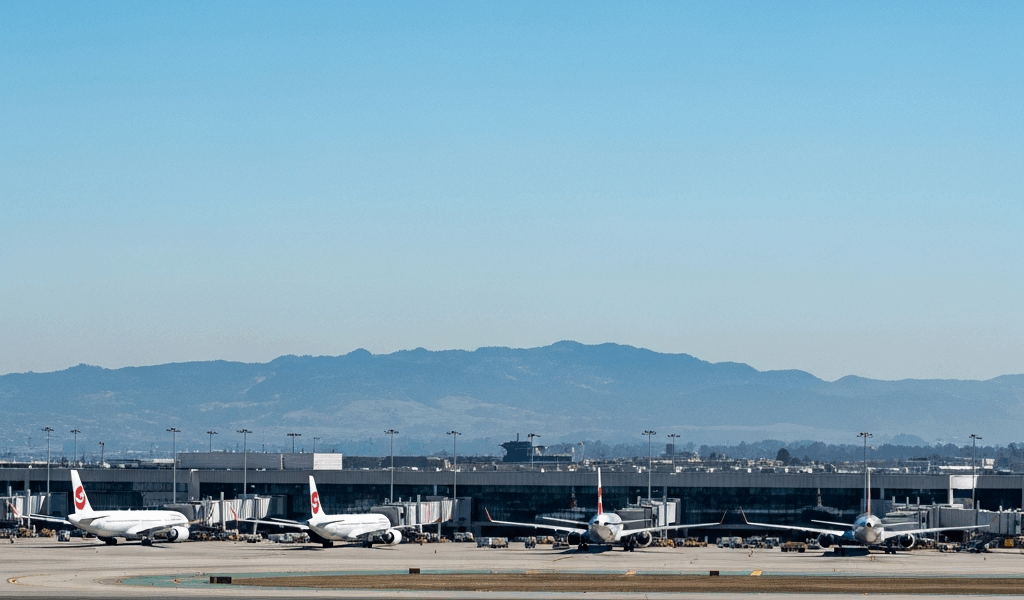
San Francisco International Airport is struggling. A fourfold increase in arrival delays has hit the West Coast’s busiest international hub as infrastructure work collides with new FAA safety restrictions right in the middle of peak summer travel season. The airport will operate at sharply reduced capacity through early October.
The numbers tell a stark story. Average flight delays have jumped from 5 minutes to 20 minutes since the FAA’s April 1 prohibition on simultaneous parallel landings took effect—and that’s before factoring in a six-month runway rehabilitation project that began March 30 and is expected to run through October 2, 2026. Together, these constraints have slashed SFO’s arrival capacity from 54 flights per hour down to 36. That’s a one-third reduction, and it’s rippling across domestic and international networks.
Safety Mandate Drives Operational Overhaul
The FAA’s ban on parallel landings came straight out of tragedy. A 2023 American Airlines Flight 5342 accident—in which a Bombardier CRJ700 collided with an Army UH-60 Black Hawk during final approach—exposed serious gaps in visual separation procedures. The NTSB investigation found systemic failures, and the FAA responded with a nationwide General Notice suspending visual approaches in congested airspace.
SFO has a particular problem. Its parallel east-west runways (28L and 28R) sit just 750 feet apart—closer than any other major U.S. hub. Compare that to Atlanta, Dallas, or Amsterdam, where parallel runways are spaced 1,000 to 4,000 feet apart. That extra distance allows those airports to keep simultaneous operations going under the new safety protocols. Not SFO.
“The FAA has made us aware of this reduced arrival rate,” said Doug Yakel, SFO spokesperson. “While we were forecasting about 15% of flights being delayed by our runway project, we expect this change will increase the delay potential to approximately 25% of arriving flights experiencing a delay of at least 30 minutes.”
Construction Timeline Compounds Constraints
The timing is brutal. Runway 1R rehabilitation—a $180 million resurfacing and infrastructure upgrade with $92.1 million in FAA funding—removes one of three primary landing runways right when peak summer demand arrives. The project includes taxiway upgrades and lighting improvements but is expected to wrap up around early October. That overlap is especially painful during the Bay Area’s notorious June-through-August marine fog season.
Visibility-limited conditions during those fog events can push arrival rates down to 18-24 flights per hour, Yakel noted. Add that on top of the baseline 36-flight-per-hour constraint from the parallel landing ban, and you’ve got a cascading crisis.
Delay data from April 1 through June 10 shows just how bad peak hours have gotten. Flights arriving between 1:00 PM and 9:00 PM hit delay rates exceeding 50%. Morning arrivals at 5:00 AM fared better, averaging 10% delays. Domestic operations took the harder hit than international traffic. Departures have jumped from a 16% delay rate in 2025 to 45% in the period since April 1—adding nearly 11,000 delayed takeoffs.
Carrier Exposure and Network Risk
United Airlines operates roughly 50% of SFO’s traffic, putting it in the crosshairs. The carrier has started holding aircraft at origin airports rather than feeding them into congested holding patterns and has flagged potential schedule adjustments for its transpacific routes to Tokyo, Seoul, and Sydney.
Alaska Airlines, SFO’s second-largest operator, said conditions are “changing by the day” as it evaluates the impact. Both carriers are working with the FAA on revised procedures.
Outlook and Mitigation
FAA leadership confirmed zero loss-of-separation events since April 1 and announced that new flight procedures for Runway 28R will be published in July. That could help ease the squeeze. But here’s the catch: the parallel landing ban is described as permanent in multiple FAA documents, which suggests SFO’s elevated delay profile will stick around well beyond peak season.
Even when Runway 1R reopens in October, arrival capacity will only partially recover—capping out at 45 flights per hour. That’s still 20% below pre-restriction maximums. The FAA expects the precision approach procedure rollout to happen gradually rather than restore the old visual operations.

Stay in the loop
Get the latest aviation news updates delivered to your inbox.