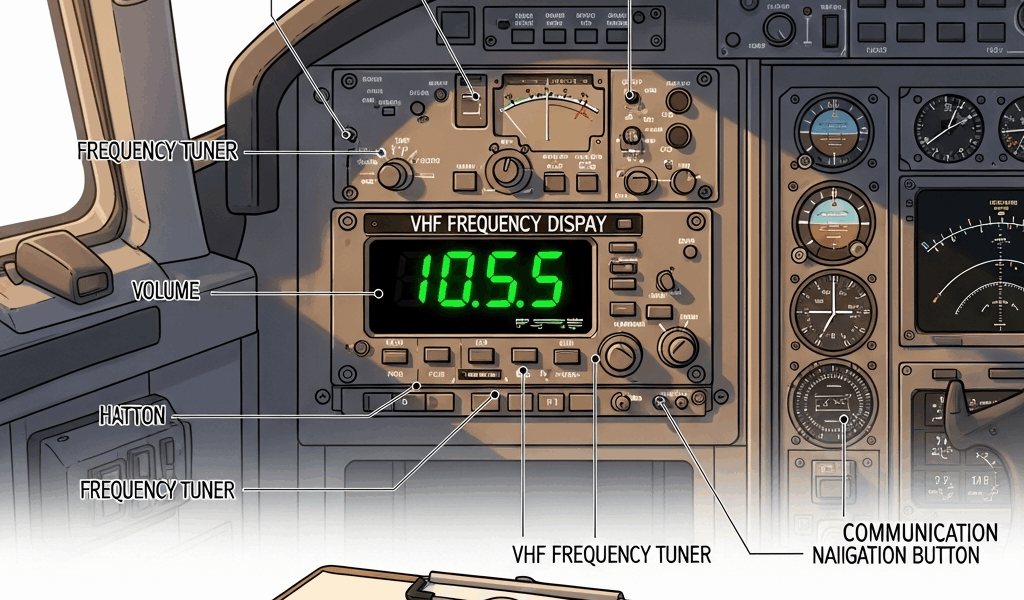
Runway Incursions Keep Happening — And Not Just to Bad Pilots
Runway safety has gotten complicated with all the assumptions flying around. Most people hear “runway incursion” and picture a distracted student pilot who skipped preflight briefing. That’s not what the data shows. The NTSB has documented these events happening to experienced, attentive pilots — people who knew the regs, briefed the charts, and still found themselves somewhere they weren’t supposed to be.
As someone who has logged over 2,000 hours, I learned everything there is to know about this particular failure mode the uncomfortable way. I’ve come close enough to misreading a hold short line that I now brief myself on it before every single flight into a Class B or C airport. Today, I will share it all with you.
The NTSB keeps pointing to the same three causes: failure to follow clearance instructions exactly as given, misunderstanding ground control, and loss of situational awareness during taxi. None of those require a reckless pilot. They require a busy one, a complex airport, and one moment where attention slipped — maybe three seconds. That’s enough.
The fixable part is understanding precisely where the failure happens. The actual moment. The actual radio exchange. Build defenses around those, and your risk drops significantly. So, without further ado, let’s dive in.
Misreading Your Taxi Clearance Before You Even Move
Ground control says: “Cessna 4-2-Bravo, taxi to runway 2-8 via taxiways Alpha, Charlie, and hold short of Bravo.”
You read back: “Taxi to 2-8 via Alpha, Charlie, hold short Bravo, 4-2-Bravo.”
Ground says: “Readback correct.”
And then you taxi.
Here’s what should have happened before the wheels moved — you should have written that down. Physically written it. Not typed it into your iPad Notes app while flying single-pilot and managing an engine run-up. Actually written it on the paper pad or sectional in front of you. Writing forces your brain to parse the instructions in sequence. When you’re coordinating a crosswind check with one hand and trying to hold four taxiway names in working memory with the other, you’re not flying. You’re juggling.
The most common mistake I see is this: a pilot receives a clearance with an intersection name they don’t immediately recognize. Instead of asking ground to repeat it or requesting progressive taxi, they push forward and hope the taxiway signs sort things out. At Atlanta or Dallas-Fort Worth, you’ve got overlapping taxiways, multiple routes feeding the same runway, and single-letter intersection names that look nearly identical from the cockpit window at 6 p.m. in fading light.
Pushed by Atlanta’s ground control one afternoon, I was cleared via Yankee, Delta, hold short of Bravo. Problem: I’d never flown into ATL before. Hadn’t briefed the airport diagram nearly enough. I should have stopped cold. Instead — and this is the right call — I asked for progressive taxi in plain language: “Ground, 4-2-Bravo, request progressive to runway 2-8, unfamiliar with this airport.” Ground obliged without hesitation. Five extra minutes on the ground. Zero stress. Don’t make my mistake of almost not asking.
A proper readback isn’t just parroting letters and numbers back. It covers the destination runway, the route, and — critically — the hold short instruction. Here’s the difference:
Wrong readback: Ground clears you via Alpha, Charlie, hold short Bravo. Pilot reads back: “Alpha, Charlie, Bravo.”
Right readback: Ground clears you to runway 2-8 via Alpha, Charlie, hold short Bravo. Pilot reads back: “Cleared to taxi runway 2-8 via Alpha, Charlie, hold short of Bravo, Cessna 4-2-Bravo.”
The right version confirms three things: destination runway, route, hold short point. It’s longer. It’s also the difference between ground catching your mistake in real time versus you discovering it two taxiways later with no diagram in hand.
Hold Short Lines — What They Actually Mean and When Pilots Miss Them
There are four types of runway hold short markings. Most pilots remember two. I used to be one of those pilots. Probably should have opened with this section, honestly, because it’s simultaneously the most basic concept in surface operations and the one pilots most often treat as a strong suggestion rather than a hard stop.
But what is a hold short marking? In essence, it’s a painted boundary telling you airport authority ends and runway authority begins. But it’s much more than that — it’s the line where a clearance from ground control stops being valid and a separate clearance from tower becomes required.
The solid double yellow lines across a taxiway — that’s the one everyone knows. You stop before them. Full stop. Then there are three others: a solid yellow line paired with a row of dashed white lines on the runway side marks a runway approach hold short. White dashes at taxiway intersections mark ILS critical area boundaries. On some Class D fields, solid yellows mark the runway safety area perimeter. The last two show up infrequently — and that’s exactly why pilots miss them. Unfamiliarity breeds complacency faster than anything else.
Here’s the scenario that causes incidents: you receive a clearance to “taxi to runway 2-8.” You push from the ramp. You cross taxiway Alpha, then Charlie. A painted line appears across the taxiway — solid yellow, dashes on the far side. You don’t have takeoff clearance yet. Ground hasn’t cleared you onto the runway. That line is telling you to stop and wait.
The difference between “cleared to taxi to runway 2-8” and “cleared onto runway 2-8” is everything. The first clears you to approach the runway. The second clears you to enter it. Most incursions happen when a pilot treats those two phrases as interchangeable. They are not.
Correct action at that hold short line: stop. Wait for tower to explicitly clear you onto the runway. That clearance sounds like: “Cessna 4-2-Bravo, runway 2-8, cleared for takeoff.” Only then do you cross.
At night, or in low visibility, that painted line is genuinely hard to spot. A Garmin G1000 — even the updated GTN 750 panel — doesn’t flash a warning that says “hold short line at your 6 o’clock.” You have to see it visually or know from the airport diagram that it’s coming. Pre-flight the diagram. Mark the hold short positions. Know where they are before you ever call ground.
Cockpit Distractions That Put You in the Wrong Place
Your iPad mini is mounted on the yoke. You’re entering the direct route into the G1000. Ground just handed you a four-segment taxi route. Your passenger is asking why you turned left. You’re running the pre-takeoff checklist. You’re also trying to identify taxiway Charlie on a wet Tuesday evening at an airport you’ve never seen before.
One of those tasks has to pause. It’s almost always situational awareness that loses.
Heads-down time during taxi is the fastest way to misplace yourself on an airport surface. I’ve watched pilots so focused on entering a flight plan that they overshot a taxiway turn and ended up pointed at a cargo ramp. I’m apparently someone who defaults to programming first and looking up second — and that habit nearly cost me twice before I broke it. A pilot I know once programmed the wrong runway into the GPS entirely and didn’t catch it until ground control told him he was taxiing away from his assigned runway. That was at KDFW. That was not a fun radio call.
Here’s the rule — stop taxiing before you look down. If you need to reprogram the GPS, adjust the trim, or pull up the airport diagram, ask ground for a moment. “Ground, Cessna 4-2-Bravo, request brief hold for flight plan entry.” They’ll approve it in about two seconds. You get thirty uninterrupted seconds of focus. The alternative to that thirty-second pause is potentially a runway incursion report filed with the FAA.
Night operations amplify every distraction by a factor of two. Taxiway lines wash out. Signs take longer to read and process. The airport diagram shifts from supplementary reference to primary navigation tool. That’s exactly when pilots most often lose position awareness — at night, in marginal visibility, under high workload. Brief for it specifically before those flights.
Passenger questions during taxi get deflected with a short, clear promise: “I’ll answer that in just a minute — need to focus on taxi right now.” Frame it as safety, not rudeness. Every passenger I’ve ever flown with understood immediately.
What to Do If You Realize You Are on an Active Runway
This is the moment where hesitation is the actual danger.
You realize. Maybe ground clears another aircraft to land on your runway. Maybe you catch landing lights on short final at your 12 o’clock. Maybe you pull up the airport diagram and recognize you’re somewhere you have no clearance to be. Heart rate spikes. The instinct is to freeze and assess.
That instinct will get someone killed.
Here are the exact steps:
- Stop immediately. Full power to nothing. Brakes fully engaged.
- Key the mic and announce your position, aircraft type, and that you are vacating. Example: “Tower, Cessna 4-2-Bravo is on runway 2-8, vacating immediately via taxiway Bravo.”
- Follow ground control’s instructions without delay or question.
Do not try to taxi quickly through the incursion. Do not assume tower already has you on radar and knows. Do not wait for them to call you first. You call. You announce. You move to the nearest clear area as directed.
The psychological freeze is real — your brain fires every alarm it has and tells you that you’ve done something catastrophically wrong. You have. But the only acceptable response to that mistake is immediate action, not paralysis. That’s why pre-briefing matters more than people admit. Before you taxi at any towered airport, mentally walk through this scenario once. Imagine the radio call. Practice the words out loud if you have to. When the moment arrives — and statistically, if you fly long enough into complex airports, it might — you won’t be inventing a response under maximum stress. You’ll be executing a plan you already made.
ATC would rather hear an uncomfortable radio call than manage a mid-field collision. Controllers aren’t judges. They’re traffic managers. A pilot who immediately reports an error and clears the runway is solving a problem. A silent pilot sitting on an active runway is creating a disaster.
Runway incursions at towered airports are almost never about incompetence. They’re about inattention, misreading, and distraction stacking up during high-workload moments — and all three are preventable. Better briefing, tighter readback discipline, and a sharper mental picture of the exact moment you transition from approaching a runway to being cleared onto one. Fly that distinction deliberately every single time, and your name stays out of the next NTSB summary.



Stay in the loop
Get the latest aviation news updates delivered to your inbox.