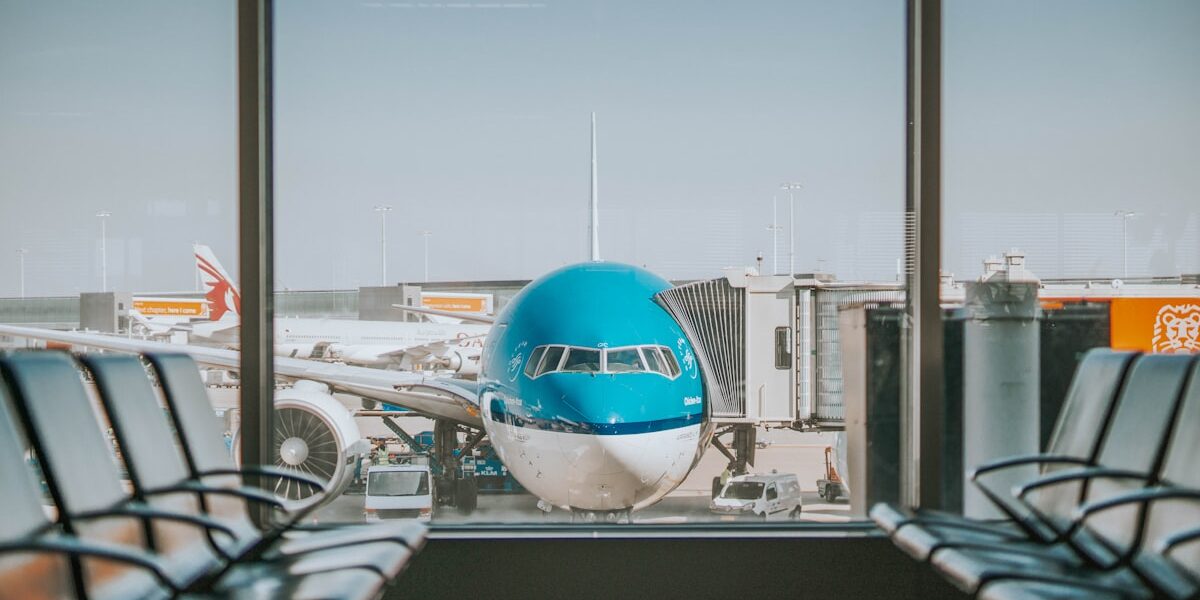
Choose Osaka Itami Airport (ITM) for most domestic trips when proximity to central Osaka is the priority. Choose Kansai International Airport (KIX) for international flights, a wider range of overseas connections, and direct rail service to several major Kansai destinations. ITM and KIX serve different roles, so the best airport is usually determined first by your route and then by your ground-transport plans.

ITM vs KIX at a glance
| Question | ITM (Osaka Itami) | KIX (Kansai International) |
|---|---|---|
| Best suited to | Domestic travel and shorter access to central Osaka | International travel and domestic connections through KIX |
| Location | North of central Osaka, between Osaka and Hyogo prefectures | On an artificial island in Osaka Bay, south of central Osaka |
| Rail access | Osaka Monorail, with transfers to other railways | JR and Nankai trains serve the airport directly |
| Typical advantage | Convenience for many Osaka-area domestic itineraries | International network and direct airport rail services |
| Main caution | No regular international passenger network | Longer trip to central Osaka than ITM in many cases |
What is the difference between ITM and KIX?
ITM is the airport code for Osaka Itami Airport, also called Osaka International Airport. Despite the legacy “International” name, its scheduled passenger role is domestic. It is the closer and often more convenient airport for flights between Osaka and Japanese cities such as Tokyo, Sapporo, Fukuoka or Okinawa.
KIX is Kansai International Airport. It is the region’s principal international gateway and also handles domestic flights. Travelers arriving from outside Japan will commonly use KIX unless their itinerary connects through another Japanese airport before continuing to ITM.
Which airport is closer to Osaka?
ITM is geographically closer to central Osaka. That can make it attractive for domestic travelers staying around Umeda, Shin-Osaka or northern Osaka. Actual journey time still depends on traffic, the selected bus or rail connection, and the final neighborhood.
KIX is substantially farther south, but it compensates with direct rail links. A farther airport with a one-seat train can sometimes be simpler than a closer airport that requires a transfer, especially when traveling with luggage. Compare the door-to-door route to your hotel rather than relying only on straight-line distance.
Getting between ITM and central Osaka
The Osaka Monorail serves Osaka Airport Station at ITM. The monorail does not run directly into central Osaka, so most rail trips require a transfer. A common route uses the monorail to Hotarugaike and the Hankyu Takarazuka Line toward Osaka-Umeda. Other connections may work better for destinations in northern Osaka.
Airport limousine buses also connect ITM with major transportation hubs and hotel areas. Road travel can be convenient with bags, but time varies with traffic. Check the airport’s official access page shortly before travel because stops, timetables and fares can change.
Getting between KIX and Osaka, Kyoto or Namba
KIX has railway stations connected directly to the passenger-terminal area. JR West and Nankai Electric Railway provide different route options:
- For Namba and southern central Osaka: Nankai services are usually the most direct rail choice. The limited-express Rapi:t offers reserved seating, while other Nankai services provide additional options.
- For Tennoji, Osaka Station, Shin-Osaka or Kyoto: JR services may fit better. The Haruka limited express serves major stations including Tennoji, Osaka, Shin-Osaka and Kyoto; stopping patterns should be checked for the specific train.
- For other destinations: Airport limousine buses and transfer services may avoid a rail connection, although road conditions affect travel time.
Do not select a train only by its advertised fastest time. Account for the wait until departure, seat reservations, luggage, transfers and the walk from the arrival station to your accommodation.
Which airport should you choose?
Choose ITM when:
- your flight is domestic and ITM offers a suitable schedule;
- you are staying in central or northern Osaka;
- a shorter ground journey is more valuable than a wider flight selection; or
- your onward domestic itinerary already uses ITM.
Choose KIX when:
- you are flying internationally;
- KIX offers the only practical nonstop or connecting itinerary;
- you want direct rail access toward Namba, Tennoji, Shin-Osaka or Kyoto; or
- you have an international-to-domestic connection ticketed through KIX.
Can you transfer between KIX and ITM?
Yes, but they are separate airports on opposite sides of the Osaka urban area. A transfer requires a ground journey, and the schedule must allow for baggage collection, customs and immigration when applicable, transportation between airports, check-in, security and a delay buffer.
Do not treat a KIX-to-ITM connection like a same-terminal transfer. Before buying separate tickets, check the operating hours and current timetable for the airport-to-airport bus or construct a rail route using official journey planners. Separate tickets can leave the traveler responsible for missed onward travel if the first flight is late.
Terminal and connection planning
Confirm the operating terminal with the airline. At KIX, the terminal matters because airport procedures and landside transfers take time. At either airport, follow the airline’s check-in deadline rather than using a generic arrival-time rule.
If two itineraries have similar fares, compare the total trip: airfare, baggage rules, airport transport, number of transfers, arrival time and hotel check-in. A cheaper flight can lose its advantage after a long or late ground transfer.
Bottom line
ITM is usually the convenient Osaka-area choice for an eligible domestic flight. KIX is the necessary and generally better-equipped choice for international travel, with useful direct rail links despite its greater distance from central Osaka. Start with the route each airport can actually serve, then compare door-to-door time and cost.
Official travel-planning sources
- Osaka Itami Airport: official access information
- Osaka Itami Airport: trains from the airport
- Kansai International Airport: official access information
- Kansai International Airport: trains from the airport
Routes, fares, terminals and timetables can change. Verify the current details with the airport and operating carrier before departure.




Stay in the loop
Get the latest aviation news updates delivered to your inbox.