
Biggest Commercial Airplanes
Commercial widebody comparisons have gotten complicated with all the A380 retirement debates, 777X certification delays, and “what actually is the biggest airplane flying today” questions flying around. Today, I will share it all with you.
Modern wide-body size comparisons grew from the jumbo-jet era. Our history of Pan Am and the Boeing 747 explains how the first high-capacity wide-body changed routes, airports and passenger expectations.
But what makes an airplane “biggest,” really? In essence, it depends on whether you’re measuring passenger capacity, maximum takeoff weight, wingspan, or cargo volume — and different aircraft lead on different metrics. But it’s much more than a size competition. For airlines deciding which widebody to operate on which routes, size translates directly into economics: seat-mile costs, gate compatibility, and whether the demand density on a given route supports the capacity.
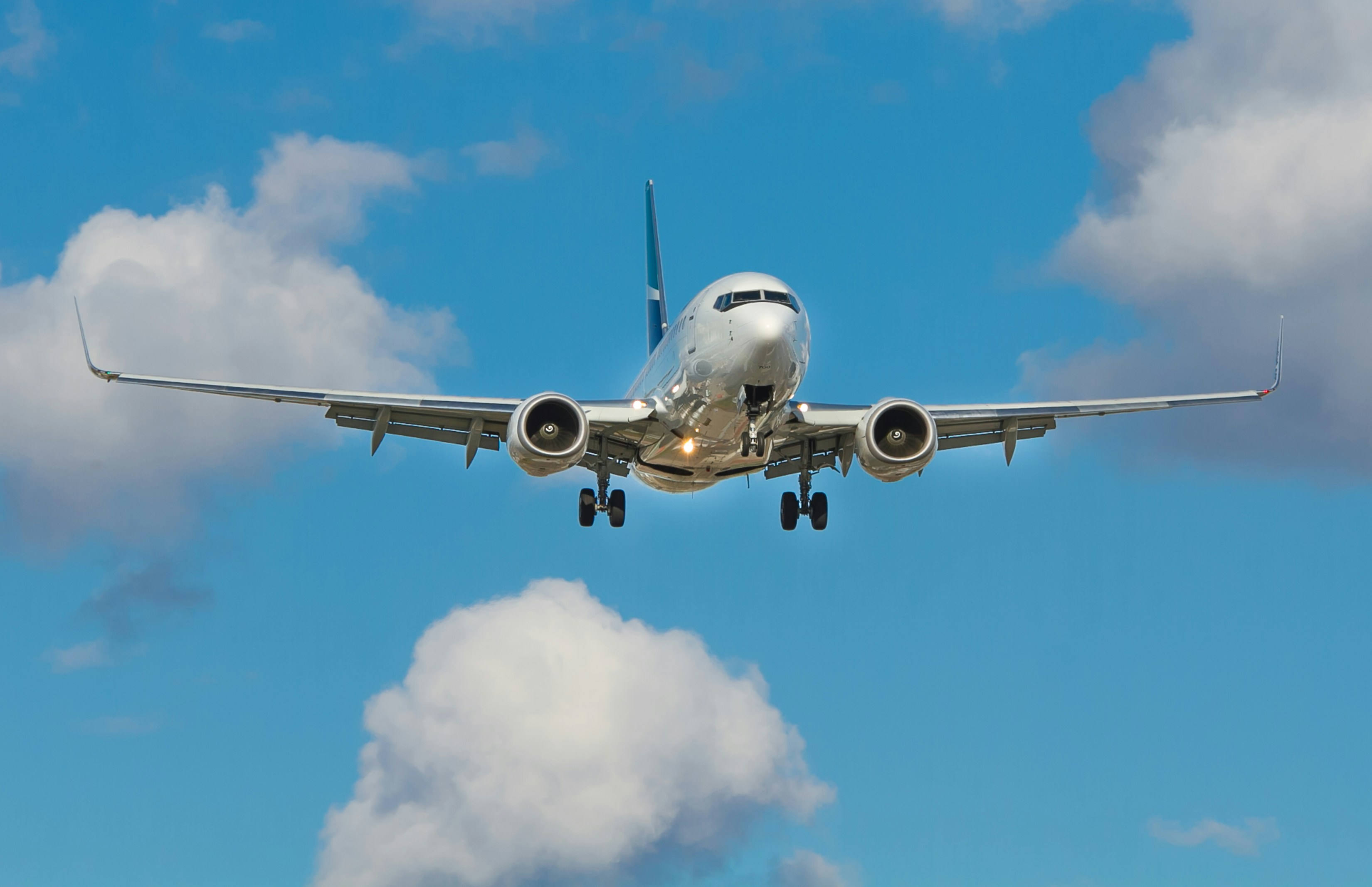
Airbus A380
The A380 is the largest commercial passenger aircraft in production history — two full-length decks, a maximum capacity of 850 in all-economy configuration, and around 555 passengers in a typical three-class layout. Singapore Airlines was the launch customer in 2007. The 79.75-meter wingspan puts it in a class that required infrastructure modifications at airports to accommodate it. Airbus ended A380 production in 2021 after insufficient orders — the market moved toward twin-engine widebodies rather than the ultra-high-capacity hub aircraft the A380 was designed for.
- First flight: April 27, 2005
- Engines: Four Engine Alliance GP7200 or Rolls-Royce Trent 900
- Maximum range: 8,000 nautical miles (14,800 kilometers)
Boeing 747-8
The 747-8 is the largest and most capable variant of the 747 family — the final evolution of a design that first flew in 1968. Don’t make my mistake of conflating the 747-8I (passenger) with the 747-8F (freighter) when looking at capacity numbers — at least if you’re comparing widebodies, because the freighter variant carries almost no passengers but moves enormous cargo volumes. The passenger version typically seats 467 in three-class configuration with a 68.4-meter wingspan. Lufthansa and Korean Air are among the primary operators. The GEnx-2B67 engines represent a significant efficiency improvement over the original 747 powerplants, though the 747’s four-engine design still carries a higher operating cost than twin-engine widebodies.
- First flight: February 8, 2010
- Engines: Four GEnx-2B67
- Maximum range: 7,730 nautical miles (14,320 kilometers)
Boeing 777-9
The 777-9 is the longest commercial aircraft ever built — 76.7 meters from nose to tail — and the largest variant in the 777X family. The GE9X engines are the largest commercial aircraft engines by fan diameter ever produced. Capacity runs to approximately 426 passengers in two-class. The folding wingtip system — the 71.8-meter wingspan folds to fit standard Category E gates — is an engineering solution to the practical airport infrastructure constraint that limits ultra-wide wingspans. Certification has been delayed significantly from the original timeline, pushing entry into service past the initial projections by several years.
- First flight: January 25, 2020
- Engines: Two General Electric GE9X
- Maximum range: 7,285 nautical miles (13,500 kilometers)
Airbus A350-1000
The A350-1000 is the largest A350 variant — around 410 passengers in three-class configuration, 64.75-meter wingspan, and the longest range of any A350 model at 8,700 nautical miles. The Trent XWB-97 engines are among the most thermodynamically efficient large turbofans in commercial service. Qatar Airways and Cathay Pacific are among the launch operators. The A350-1000 competes directly with the 777-9 for the premium long-haul twin widebody position — airlines choosing between them are evaluating range, economics, and cabin product, not raw size difference.
- First flight: November 24, 2016
- Engines: Two Rolls-Royce Trent XWB-97
- Maximum range: 8,700 nautical miles (16,100 kilometers)
Boeing 787-10
The 787-10 is the largest Dreamliner variant — about 330 passengers in two-class, 60.1-meter wingspan. It gives up range relative to the 787-8 and 787-9 (6,430 nautical miles versus the 787-9’s 7,530) in exchange for more capacity. The fuel burn advantage over previous-generation aircraft — roughly 25% better than the aircraft it typically replaces — made the 787 family commercially successful across all variants. Singapore Airlines and United Airlines are among the 787-10 operators. First, you should understand the tradeoff between range and capacity in the 787 family before comparing models — at least if you’re analyzing which variant an airline selected for a specific route, because the choice usually reflects the route’s demand density versus distance characteristics.
- First flight: March 31, 2017
- Engines: Two Rolls-Royce Trent 1000 or General Electric GEnx-1B
- Maximum range: 6,430 nautical miles (11,910 kilometers)
Antonov An-225 Mriya
The An-225 is not a commercial passenger aircraft, but its size statistics are impossible to leave out of any biggest-airplanes list. A 250-metric-ton internal payload capacity, 88.4-meter wingspan, six Progress D-18T turbofan engines, and maximum takeoff weight exceeding 600 metric tons make it the heaviest aircraft ever built. It was designed to transport the Soviet Buran spaceplane. The single operational An-225 was destroyed in February 2022 during the Russian invasion of Ukraine at Hostomel Airport. Whether a second An-225 will ever be completed — a partially-built airframe existed — remains an open question tied to circumstances well beyond aviation.
- First flight: December 21, 1988
- Engines: Six Progress D-18T turbofan engines
- Maximum range: 8,300 nautical miles (15,400 kilometers) unladen
Recommended Aviation Gear
This section includes affiliate links. We may earn a commission at no extra cost to you.
David Clark H10-13.4 Aviation Headset
The industry standard for aviation headsets.
$376.95
Check Price on AmazonPilots Handbook of Aeronautical Knowledge
Essential FAA handbook for every pilot.
$25.42
Check Price on Amazon

Stay in the loop
Get the latest aviation news updates delivered to your inbox.