
Aircraft Flight Control Performance: Understanding Autopilot and Fly-By-Wire Systems
Aviation flight control performance discussions have gotten complicated with all the “fly-by-wire versus conventional hydromechanical system” debates, the autopilot authority and envelope protection questions, and “how does control law software determine what the aircraft will and won’t do” conversations flying around. Today, I will share it all with you.
But what is aircraft flight control performance, really? In essence, it’s the measure of how precisely and reliably an aircraft’s control systems translate pilot commands and autopilot inputs into the flight path the aircraft actually flies — encompassing everything from the mechanical response of a conventional aileron linkage to the sophisticated envelope protection logic in Airbus’s fly-by-wire control law architecture. But it’s much more than response time. For pilots, dispatchers, and aviation safety professionals, understanding what flight control systems do — and what they limit — is fundamental to operating modern aircraft safely and to understanding what happened in accident scenarios where control law behavior was a contributing factor.
Understanding Flight Control Loops
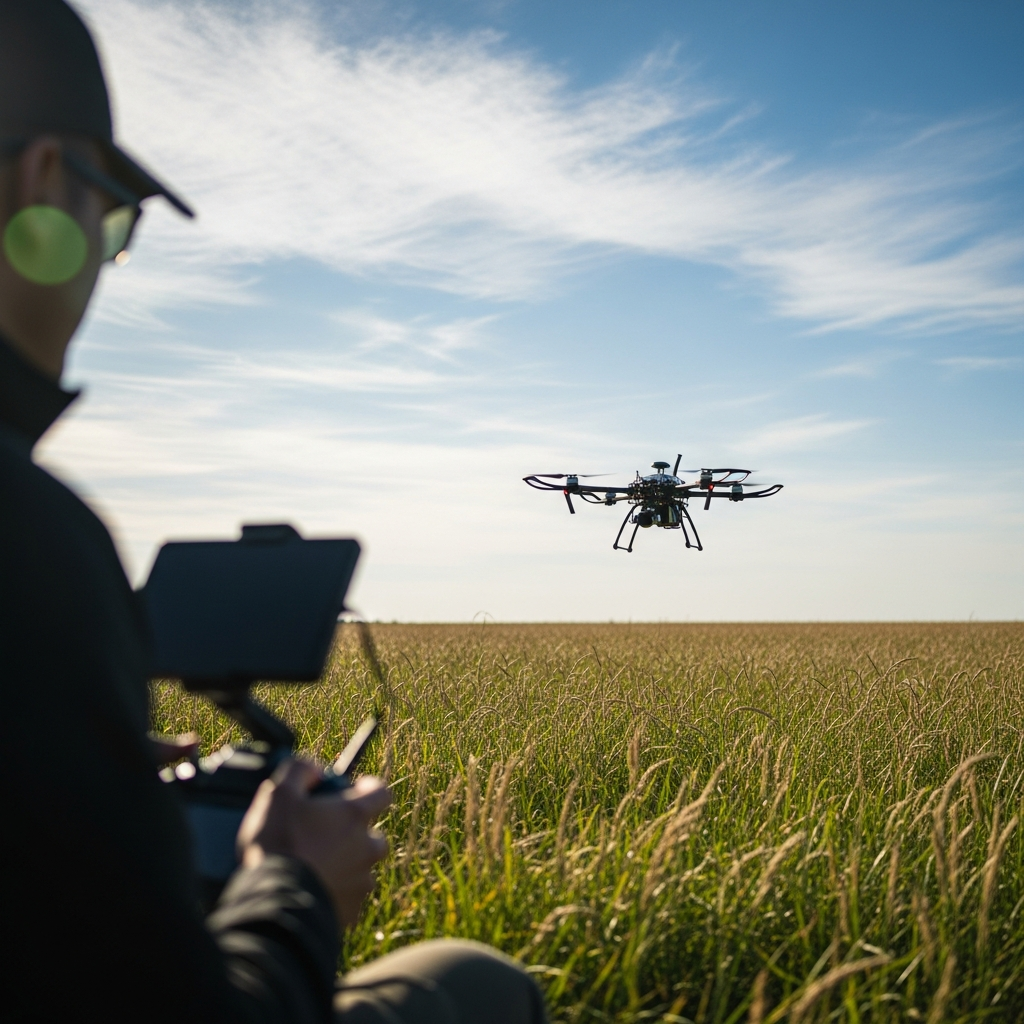
Modern aircraft use closed-loop control systems in which sensors continuously measure flight parameters — airspeed, altitude, pitch attitude, roll angle, angle of attack — and the flight control computers compare these measurements to commanded values, generating corrective control surface deflections when deviations occur. In autopilot operation, the pilot sets the desired flight path parameters and the system maintains them continuously. In fly-by-wire aircraft, this loop operates even during manual flight — the sidestick or yoke input represents a commanded flight parameter rather than a direct control surface command, and the computer mediates between pilot intent and actual surface deflection.
Importance of Control Loop Performance
Proper flight control loop performance directly affects safety, passenger comfort, and fuel efficiency. An autopilot with poor altitude-hold performance produces altitude deviations that trigger TCAS advisories. A flight director with poor bank angle tracking makes approaches in turbulence unnecessarily workload-intensive. Don’t make my mistake of treating autopilot performance degradation as a nuisance rather than a safety concern — at least if you’re flying IFR in IMC, because the difference between an autopilot that holds the localizer within a tenth of a dot and one that swings a full dot or more determines whether you can execute an approach to minimums with confidence or whether you need to hand-fly from the final approach fix.
Key Performance Metrics in Aviation Flight Control
- Tracking accuracy: How closely the autopilot maintains the commanded flight path — measured in feet of altitude deviation, degrees of heading error, or fractions of a CDI dot
- Response time: How quickly the system reacts to deviations or commands — critical in turbulence where corrections must be fast enough to prevent large excursions
- Stability: Whether the system converges on the commanded parameter smoothly or oscillates around it — a poorly tuned autopilot that hunts continuously fatigues passengers and increases structural loads
- Envelope protection: In fly-by-wire aircraft, the control laws that prevent the pilot from commanding flight parameters outside the certified envelope — high angle of attack, excessive bank angle, overspeed
Fly-By-Wire Control Laws
Airbus’s fly-by-wire architecture introduced a fundamental change in the pilot-aircraft control relationship. In Normal Law, the sidestick commands load factor (g) in pitch and roll rate, with the computer continuously applying corrections to maintain the commanded state. The aircraft will not exceed 2.5g, 30 degrees bank, or approach the stall angle of attack regardless of sidestick input. Boeing’s approach in the 777 and 787 uses fly-by-wire with less envelope protection, trusting pilot judgment more and computer authority less.
Autopilot Tuning and Performance
Autopilot control loop performance is set by gain parameters that determine how aggressively the system responds to deviations. An autopilot set with too much gain oscillates — correcting an altitude deviation so strongly that it overshoots, then correcting back, producing a continuous phugoid-like oscillation. Too little gain allows deviations to persist and grow. First, you should understand that autopilot performance degradation often develops gradually — at least if you’re responsible for maintenance oversight of an aircraft’s avionics, because autopilot gains drift as servo mechanisms wear and sensor calibrations shift, and what began as a tight altitude-hold system can degrade into an acceptable-but-imprecise one before anyone notices the change in daily operations.
Advanced Control Systems: FMS Integration
The Flight Management System integrates with autopilot and autothrottle to manage not just immediate flight path but the entire route profile — climb gradients, speed schedules, top-of-descent calculation, and fuel optimization. Modern FMS-coupled approaches allow the aircraft to fly ILS, RNAV, and RNP approaches with precision that exceeds manual hand-flying on most days in most conditions. The FMS uses predictive logic — computing required vertical speed and speed targets miles ahead of the point where they’ll be needed — rather than reacting only to current deviation.
Recommended Aviation Gear
This section includes affiliate links. We may earn a commission at no extra cost to you.
David Clark H10-13.4 Aviation Headset
The industry standard for aviation headsets.
$376.95
Check Price on AmazonPilots Handbook of Aeronautical Knowledge
Essential FAA handbook for every pilot.
$25.42
Check Price on Amazon


Stay in the loop
Get the latest aviation news updates delivered to your inbox.