
Pitot-Static Errors: What They Are, Why They Matter, and How to Handle Them
Pitot-static errors have gotten complicated with all the “which accidents were caused by blocked pitots” retrospectives, the Air France 447 analysis debates, and “what does a pilot actually do when airspeed looks wrong in IMC” questions flying around. Today, I will share it all with you.
But what are pitot-static errors, really? In essence, they’re deviations in airspeed, altitude, and vertical speed instrument readings caused by contamination, blockage, or position problems in the pitot-static system — the two-port pressure sensing architecture that feeds the three most critical flight instruments. But it’s much more than a maintenance issue. For pilots flying in IMC when airspeed or altitude instruments go unreliable, understanding what the error looks like and what it implies for other instruments is the difference between diagnosing the problem and making it worse.
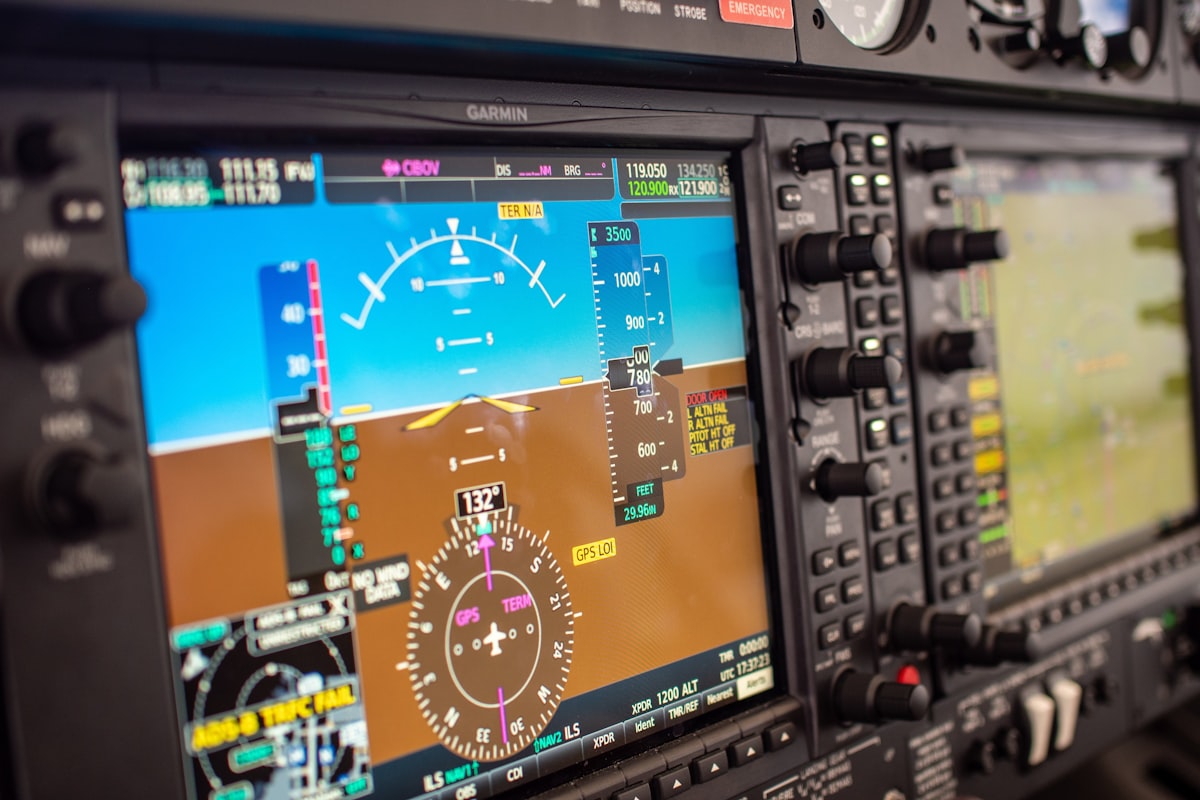
Types of Pitot-Static Errors
- Position Error: Caused by misalignment of the pitot tube or static port relative to undisturbed airflow — varies with angle of attack and speed
- Instrument Error: Mechanical inaccuracies internal to the instruments themselves — addressed through calibration
- Blockage: Obstruction in the pitot tube or static port producing false or frozen readings
- Density Error: Variations in air density not accounted for by the instruments — addressed by converting indicated to true airspeed
Position Error
Position error occurs when the aircraft structure disturbs the airflow reaching the pitot tube or static ports. Even in well-designed installations, the airflow at the sensing points isn’t identical to freestream — it’s affected by the wing, fuselage, and local flow field. The error varies with angle of attack and airspeed, which is why aircraft flight manuals include position error correction tables. Don’t make my mistake of treating position error as negligible for instrument approaches — at least if you’re operating a type where position error at low speed and high angle of attack is significant, because the airspeed you’re flying is the indicated speed, and the correction table tells you how far off that is from calibrated airspeed.
Blockage: The Most Dangerous Error Type
Blockage is the failure mode that has contributed to fatal accidents. The pitot tube is vulnerable to ice — which is why pitot heat is mandatory in IMC — and to insect contamination on the ground if pitot covers aren’t used during extended parking. A blocked pitot tube with an unblocked static port causes the airspeed indicator to behave erratically, often increasing with altitude gain and decreasing with altitude loss as it responds to static pressure changes rather than dynamic pressure. A blocked static port causes the altimeter and VSI to freeze at the last reading before blockage, while airspeed may read high because static pressure trapped inside the system is lower than ambient as the aircraft climbs.
Impact on the Three Primary Instruments
The airspeed indicator measures the difference between pitot (dynamic + static) and static pressure. Pitot blockage severs the dynamic pressure input; static blockage traps the reference pressure. The altimeter uses only static pressure compared to a calibrated reference — static blockage freezes it. The VSI measures the rate of change of static pressure — static blockage freezes it at zero or the last reading. Understanding which instrument is affected by which failure type is what enables a pilot to cross-check and identify what’s wrong rather than following a faulty instrument into a dangerous situation.
Preventive Measures
- Pitot Heat: Anti-icing heat for the pitot tube prevents ice blockage — should be activated before entering potential icing conditions, not after
- Pre-Flight Inspection: Physically check pitot tube and static ports are clear before every flight
- Pitot Covers: Use and verify removal of pitot covers during extended ground time
- Alternate Static Source: Know the alternate static source location and procedure — it provides a backup if the primary static port is blocked
First, you should understand that the alternate static source is the most underappreciated instrument pitot-static backup — at least if you’re transitioning to complex aircraft, because it provides static pressure from the cabin (which is slightly different from ambient and requires instrument corrections noted in the AFM) and it works when the primary static port is blocked, which is exactly when you need it.
Technological Advances
Modern air data computers cross-compare inputs from multiple pitot probes and static ports, flagging discrepancies that a single sensor reading would not reveal. EFIS systems provide data validity annunciations when sensor disagreement exceeds defined thresholds. GPS-derived groundspeed data, while not a direct substitute for airspeed, provides a sanity check on indicated airspeed that completely independent sensor data can’t. These redundancies reduce the likelihood that a single sensor failure produces an undetected false reading, but they don’t eliminate the pilot’s responsibility to understand failure modes and cross-check instruments.
Training and Awareness
Simulator training for pitot-static failures — particularly unreliable airspeed in IMC — is a required element of instrument currency and type rating training for good reason. The cognitive challenge of recognizing instrument unreliability, identifying the likely failure mode, transitioning to alternate procedures, and maintaining aircraft control while doing so is not a skill that develops from reading about it. Regular simulator exposure to these scenarios builds the recognition pattern that real-world incidents require in seconds.
Recommended Aviation Gear
This section includes affiliate links. We may earn a commission at no extra cost to you.
David Clark H10-13.4 Aviation Headset
The industry standard for aviation headsets.
$376.95
Check Price on AmazonPilots Handbook of Aeronautical Knowledge
Essential FAA handbook for every pilot.
$25.42
Check Price on Amazon


Stay in the loop
Get the latest aviation news updates delivered to your inbox.